
The Queensland Government has appointed CPB Contractors to deliver the Townsville Correctional Centre Capacity Uplift project, adding 400 new beds across 200 additional cells plus security upgrades at the existing North Queensland facility. The job is expected to generate about $730 million in revenue for the builder, a CIMIC Group company.
Inside Construction reported the award, noting the work will be delivered in partnership with Queensland Corrective Services and the Department of Housing and Public Works.
Worth being precise about that headline number: $730 million is the revenue CPB Contractors expects to book, not a published project budget. It’s the contractor’s share of the pie, and it’s the figure that tells subbies how much work is sitting behind the announcement.
Building inside a jail that keeps running
The detail that shapes everything else on this job is that the centre stays open while the build goes on. Prisoners stay in it. Officers keep working shifts in it. Nothing about the site goes quiet for two years while the trades get on with it.
CPB Contractors managing director Craig Nuttall said the company would lean on decades of correctional work to deliver the project safely while limiting disruption to ongoing operations.
CIMIC Group chief executive officer Jason Spears put the delivery approach this way: “CPB Contractors’ security-led, safety-first approach, underpinned by proven systems, an experienced delivery team and rigorous accountability in live correctional environments, shapes our staging strategy and construction methodology to ensure efficient delivery and certainty of outcome for DHPW and QCS.”
Strip the corporate polish off that and you get the practical picture: staging. The work gets carved into stages that can be locked down, handed over and brought back into service without the facility losing beds it can’t afford to lose. Sequencing drives the program, not the other way around.
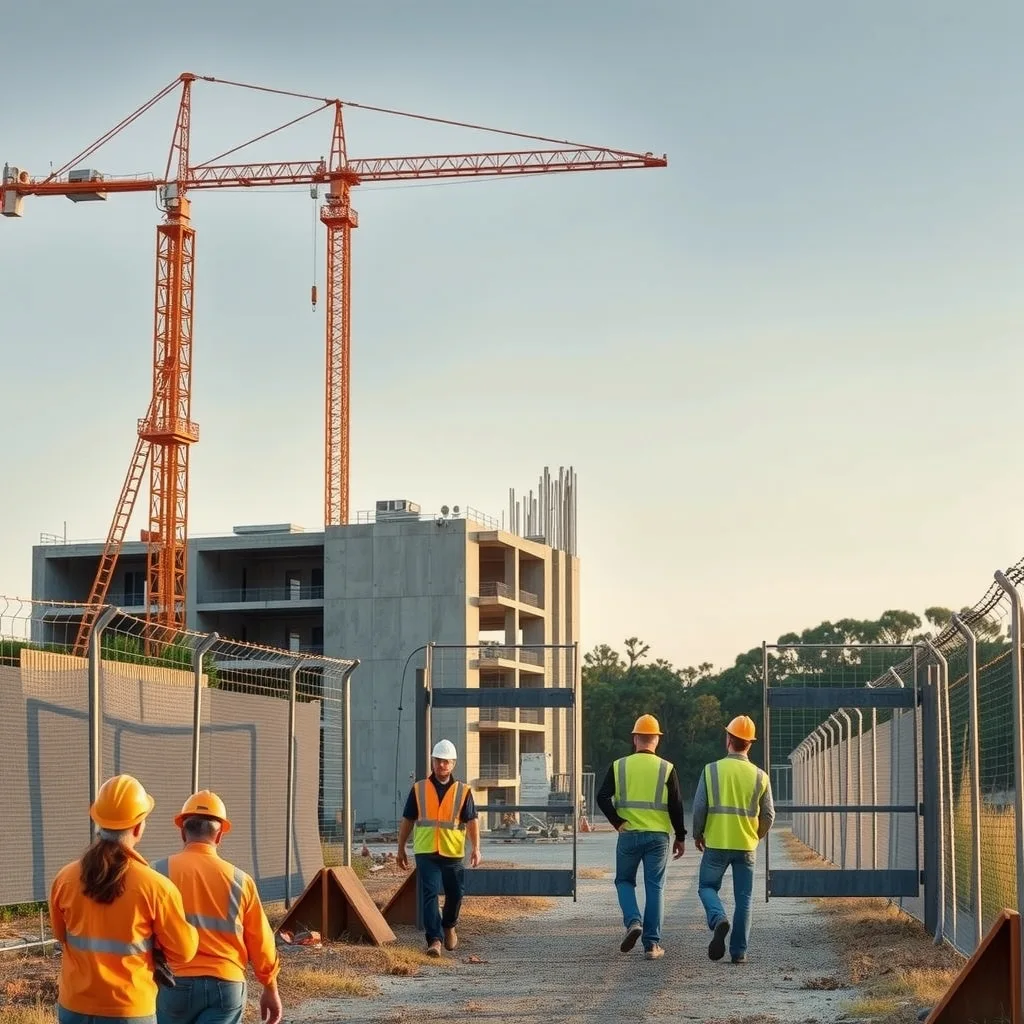
For anyone who hasn’t worked behind the wire, a live correctional site runs differently to a commercial fitout. Access is controlled, tools are accounted for, and the build program bends around the operational one. That’s the environment the head contractor is telling its client it can manage, and it’s the environment any subbie signing up needs to price for.
400 beds, 200 cells, and the fabric that goes with them
The arithmetic in the announcement is straightforward: 400 beds in 200 cells means double-bunked accommodation. Alongside the cells come what the announcement calls security enhancements to the existing facility.
That’s a different build to a residential tower or a school hall. Detention-grade construction means the finishes, the fixings, the doors, the glazing and the services all have to meet a security spec, and the inspection regime that goes with it is unforgiving. Rework isn’t a paint touch-up, it’s a compliance failure.
Spears said the works will improve the resilience and safety of the facility while helping support frontline staff at Townsville Correctional Centre.
What it means for the North Queensland order book
Nuttall pointed to the company’s earlier Queensland corrections work, including the Lotus Glen Correctional Centre Redevelopment and Capricornia Correctional Centre, and said the firm looked forward to “continuing our established relationships in Townsville and across the North Queensland region to deliver lasting community benefits through training, employment and procurement opportunities”.

“continuing our established relationships in Townsville and across the North Queensland region to deliver lasting community benefits through training, employment and procurement opportunities”
That last phrase is the one worth circling if you run a business north of Rockhampton. Training, employment and procurement is contract language for local apprentice targets and local supply packages, and it’s usually written into government building contracts as measurable commitments rather than good intentions.
The announcement doesn’t carry a start date, a completion date or a program length. Nobody should be buying a second ute off the back of it this month. What it does tell you is that a nine-figure package of work has landed in a regional market, and the subcontract tendering that follows a head contract award typically starts long before the first fence panel goes up.
Queensland subbies who want a look at the packages will need their QBCC licensing current and their safety and quality systems documented to the standard a head contractor working in a secure environment is going to demand. Prequalification paperwork is the gate here, and it closes early.
What to watch
The next real signal is the subcontract packages hitting the market and where the local content commitments land: how many Townsville and Cairns firms end up on the list, and how many apprentices get a start on the job. For the trades up north, that’s the part of this $730 million that turns into a payslip.
Frequently asked questions
What is CPB Contractors building at Townsville Correctional Centre?
CPB Contractors will add 400 new beds across 200 cells plus security upgrades at the existing North Queensland facility, working with Queensland Corrective Services and the Department of Housing and Public Works.
How much is the Townsville prison contract worth?
The job is expected to generate about $730 million in revenue for CPB Contractors, a CIMIC Group company. That figure is the contractor’s own revenue projection, not a published overall project budget.
Will Townsville Correctional Centre stay open during construction?
Yes. The centre keeps operating throughout the build, with work staged so sections can be locked down, handed over and brought back into service without the facility losing beds.
What do Queensland subcontractors need to bid for work on the project?
Subbies will need current QBCC licensing along with documented safety and quality systems that meet the standard required for work in a secure correctional environment.
Sourced from Inside Construction. Original article.