
Qualified tradies will be scored the same as university graduates under changes to Australia’s skilled migration points test announced on 17 September, alongside an update to Ministerial Direction 119 that Master Builders Australia says will give construction priority processing through the visa system. The peak body, which has pushed for both changes, called the package a step in the right direction for building more homes.
The two reforms were singled out in a statement from Master Builders Australia, which represents builders and subcontractors nationally and has spent years arguing that the migration system undervalues a trade certificate next to a degree.
The body’s welcome came with a caveat attached. Master Builders said the real test sits in implementation, and whether the changes actually deliver a fast increase in the number of skilled migrants being attracted, processed and able to get on the tools.
Two changes, and a longer list of what’s missing
Master Builders named exactly two reforms it was happy with: treating housing trades the same as university qualifications in the points test, and the Ministerial Direction 119 update covering priority processing for construction.
Everything else on its list is still outstanding. The body wants a dedicated Construction Skills Pathway to fast-track qualified tradespeople, and it wants the Pacific Australia Labour Mobility (PALM) program widened to take in non-licensed construction roles, the labouring and support work that doesn’t need a state licence to perform.
”Wholly inconsistent with the scale of this challenge”
Master Builders Australia chief executive Denita Wawn said the current system isn’t delivering for construction, and put a number on it.
“As of September 2025, around 7,040 skilled visa holders were working in core construction trade occupations nationally. That is a number wholly inconsistent with the scale of this challenge,” Wawn said.
Against that figure sits the shortfall. Master Builders Australia’s Workforce Blueprint report, released in September 2025, found Australian construction is short 141,000 workers.
“The Workforce Blueprint report released earlier this month shows construction is currently short 141,000 workers, with that gap projected to grow rapidly if governments do not lift their game on domestic training and deliver a better skilled migration system,” Wawn said.
All of the figures in this story are Master Builders’ own, drawn from its statement and the Blueprint report.
The 18,400 already living here
The part of Wawn’s statement that should interest anyone running a crew isn’t about who gets a visa. It’s about who’s already in the country.
“At the same time, an estimated 18,400 permanent migrants already living in Australia hold building and construction qualifications but are working below their skill level, blocked by slow, costly, and fragmented skills recognition and licensing arrangements.”
Wawn said the bottleneck sits entirely outside the points-test system.
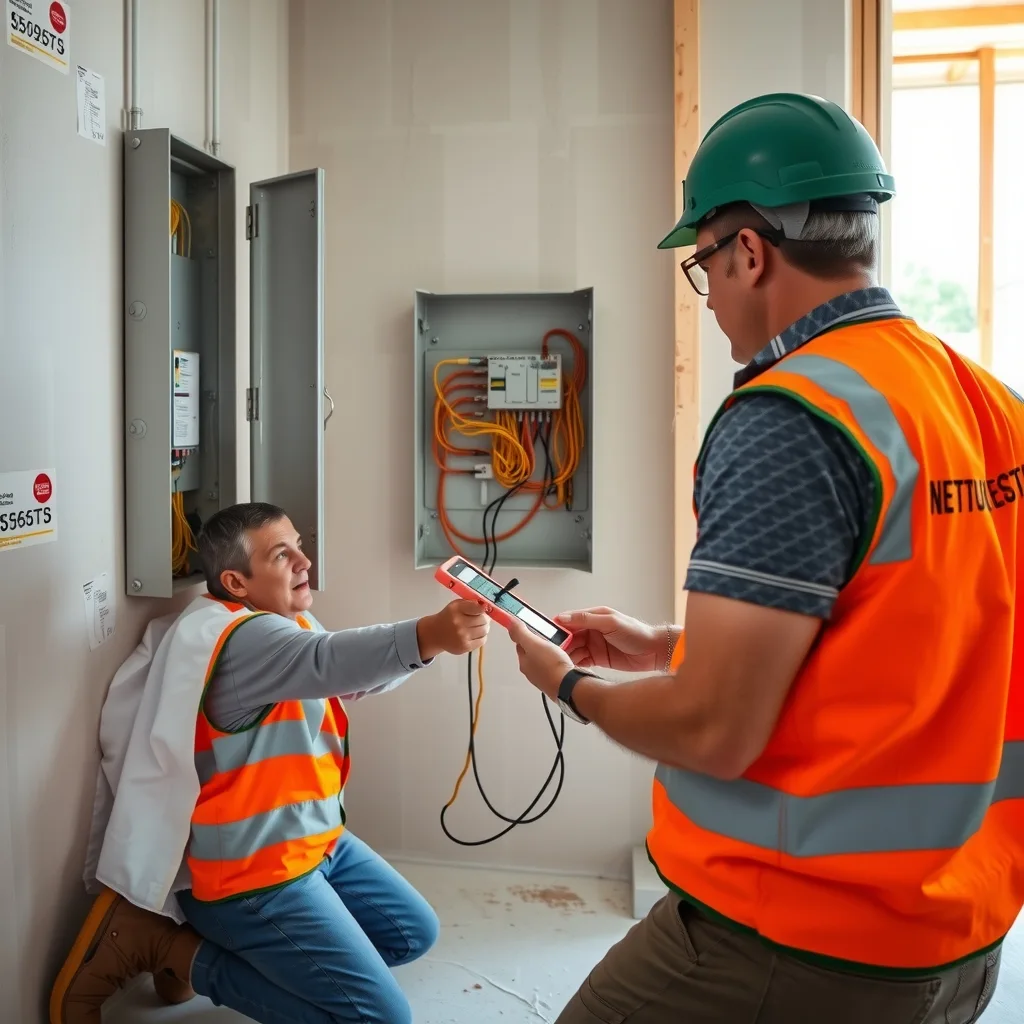
That’s the bottleneck no points test fixes. Licensing in the trades is a state and territory job, not a federal one, and it doesn’t care what’s stamped on a visa. An overseas-qualified electrician can’t legally touch fixed wiring anywhere in Australia until they hold a licence in the state they’re working in, a process that varies significantly, see how carpentry licensing works state by state, and the same rule applies to any gasfitting work, in every jurisdiction. Plumbing sits the same way, with each state setting its own recognition process for overseas qualifications.
So a migrant sparkie can land, pass a skills assessment, and still spend months as a labourer or a second pair of hands while the paperwork catches up. Multiply that across a cohort of 18,400 and you have a workforce sitting idle in skill terms while the industry advertises for the exact ticket they already hold.
What it does to the order book
Master Builders’ pitch for the migration changes rests on a single piece of arithmetic: on its analysis, each skilled migrant working in residential construction over a 30-year career contributes to the building of 21 detached homes.
For a small builder or a sub deciding whether to take on another apprentice or a second ute, the timing matters more than the announcement. A points-test change shifts who gets granted a visa; it doesn’t put a chippy on your frame next month. Between the grant and the first day on site sits skills assessment, relocation, and in the licensed trades, a state registration process that runs on its own clock.
That’s also why the processing-priority piece of the announcement may end up mattering more than the points test. Priority processing moves applications through the queue faster. The points test only decides who joins it.
What to watch
Master Builders was due to front the Inquiry into the value of skilled migration on Friday morning to give evidence on the state of the system and the depth of the sector’s workforce shortages. Expect the 7,040 and 141,000 figures to do the heavy lifting in that testimony.
The next real marker is the mid-year budget update. Wawn tied the industry’s ask directly to it.
“Today’s announcement represents progress, but it will not be enough on its own to meet Australia’s housing ambitions. If the Government is serious about delivering the National Housing Accord, it must adopt a pro-construction approach across all barriers to supply ahead of MYEFO, not push us further backwards,” she said.
On site, the thing worth watching isn’t the announcement. It’s whether visa grant times for trade occupations actually shorten, and whether the state licensing bodies start recognising overseas tickets any faster than they do now. Until that second half moves, the people on the tools won’t feel a thing.
Frequently asked questions
Can an overseas-qualified electrician start work in Australia immediately?
No. Regardless of visa status, an overseas-qualified electrician cannot legally do fixed wiring anywhere in Australia until they hold a licence in the state or territory where they’re working. The same applies to gasfitting, and plumbing recognition is also handled state by state.
How many skilled visa holders are working in construction trades in Australia?
Master Builders Australia says around 7,040 skilled visa holders were working in core construction trade occupations nationally as of September 2025, against an estimated shortfall of 141,000 workers.
What is Master Builders still asking for beyond this announcement?
It wants a dedicated Construction Skills Pathway to fast-track qualified tradespeople, and it wants the PALM program widened to include non-licensed construction roles that don’t need a state licence.
Sourced from Master Builders Australia. Original article.