
Years of NSW planning reform have lifted how much housing is allowed on paper, but a Western Sydney University professor says the state has barely started the harder job of getting it built.
Writing in The Fifth Estate, Urban Transformations Research Centre co-director Professor Nicky Morrison argues that transport-oriented development rules, the low- and mid-rise reforms, the Housing Delivery Authority and changes to building regulation have shifted the policy settings. The next fight, she says, is delivery: feasibility, funding, infrastructure and construction capacity.
The piece, published in The Fifth Estate’s Spinifex opinion column, follows Business Western Sydney’s annual Housing Now! Conference on 7 August, where Premier Chris Minns announced a Parramatta North project of around 2000 homes including affordable housing, public open space, employment and provision for a university campus linked to the Westmead Health and Innovation District.
”A planning approval is not a dwelling”
One word kept coming up across the conference day, Morrison writes: feasibility.
“A planning approval is not a dwelling, and zoned capacity does not automatically translate into homes,” she wrote. “Construction and financing costs, infrastructure requirements, contributions and delays can make development that is permissible on paper commercially impossible.”
Anyone who has priced a job off a set of approved plans and then watched it sit knows the gap she’s describing. A rezoning isn’t a start date. Builders don’t put on a second crew, and subbies don’t sign a lease on a bigger yard, off zoned capacity. They do it off signed contracts with a finance approval behind them.
Morrison’s warning is that feasibility can be used to shut down the argument rather than solve it. “Feasibility is a condition that policy has to confront. It should not become the argument that ends the policy conversation,” she wrote. If an affordable housing requirement kills a project’s numbers, she argues, cutting the requirement is only one lever. Extra density, public land, subsidies, infrastructure spending, cheaper finance and value capture are others.
She credits Department of Housing, Infrastructure and Planning secretary Kiersten Fishburn with one of the clearest accounts of what needs to change: more proportionality, predictability and coordination between agencies, and a culture aimed at outcomes instead of process. Federal Productivity Commissioner Alison Roberts made a similar point, Morrison writes, with the Productivity Commission’s current housing supply inquiry pointing at land-use controls and better coordination of housing-enabling infrastructure as the measures most likely to shift supply and affordability.
Housing Minister Rose Jackson supplied the reminder that supply isn’t only an economics problem. For people in homelessness or severe housing stress, Morrison writes, it’s first about having a secure place to live.
Prefab needs a pipeline, not a pilot
The part of the column that matters most for anyone with a factory lease or a framing crew is the section on modern methods of construction (MMC).
Minister Anoulack Chanthivong outlined the state’s regulatory reforms for prefab and modular construction at the conference. The industry discussion, Morrison writes, kept returning to three requirements: “scale, repetition and pipeline”.
Then the cautionary tale. A House of Lords Built Environment Committee inquiry in the UK found several modular firms had failed financially, and concluded public investment there hadn’t been backed by a coherent enough strategy or a strong pipeline.
“The lesson is not that MMC failed. It is that factories cannot survive on sporadic projects.”
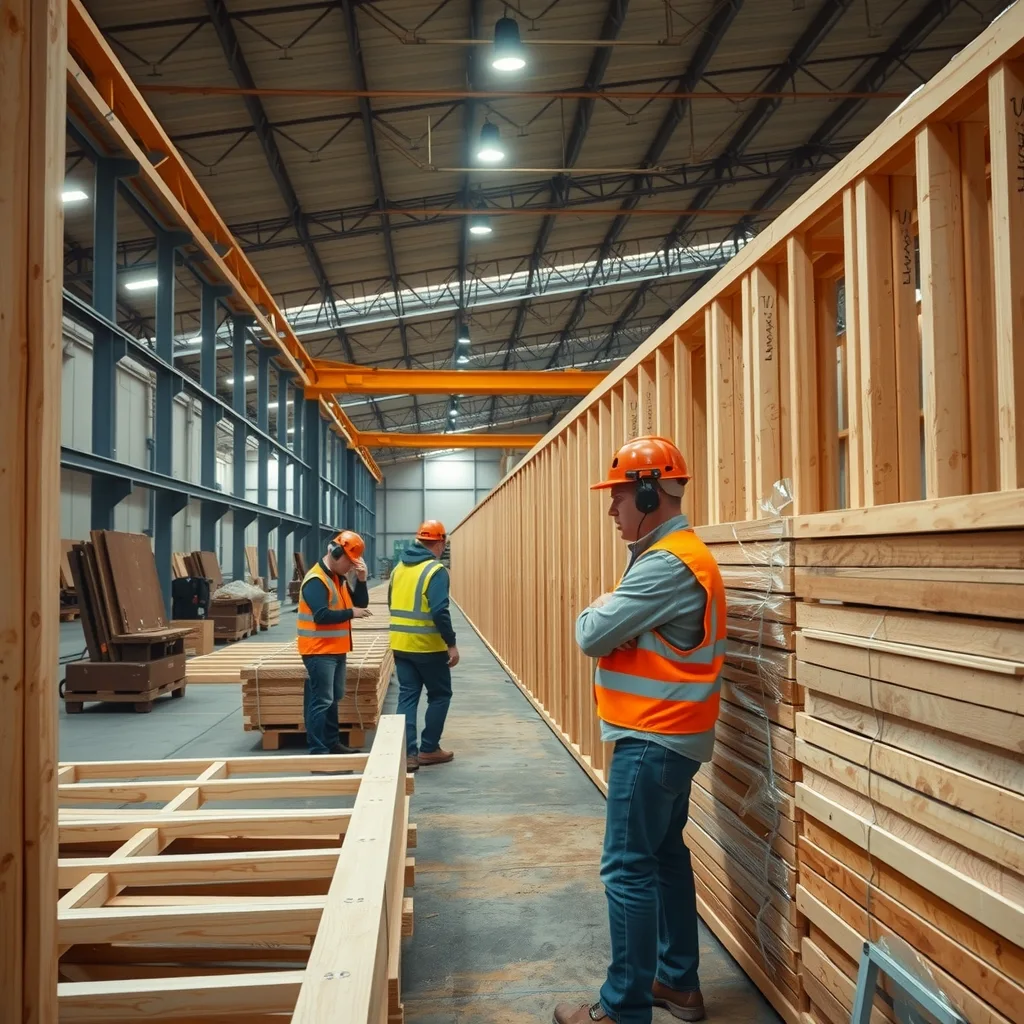
Morrison’s distinction is worth sitting with, because prefab changes where the trade work happens rather than how much of it there is. Wall and floor framing, lining, cabinetry, tiling and much of the wet-area fitout move indoors onto a line, out of the weather and off the ladder. What’s left on site is the earthworks, footings and slab, the crane lift, the module-to-module connections, and the services, waterproofing and external works that tie it all together.
The risk sits in the difference between a site and a factory. When a site job finishes, the crew rolls onto the next one. When a factory runs out of orders, the doors shut and the tooling gets sold. That’s why repeat demand matters more in modular than in traditional stick-build, and why Morrison points to public procurement of social and affordable housing, student accommodation and regional worker housing as the demand that could keep lines running.
Homes NSW is already using MMC for social housing and has set up a procurement list for manufacturers and suppliers. Landcom chief executive Alexander Wendler spoke about the agency’s modular trials and the need to move towards scale. Evolve Housing’s Lyall Gorman and Faith Housing chair Rob Stokes both pushed the same line, Morrison writes: sustained investment and long-term delivery partnerships.
Parks and pipes are enabling works, not extras
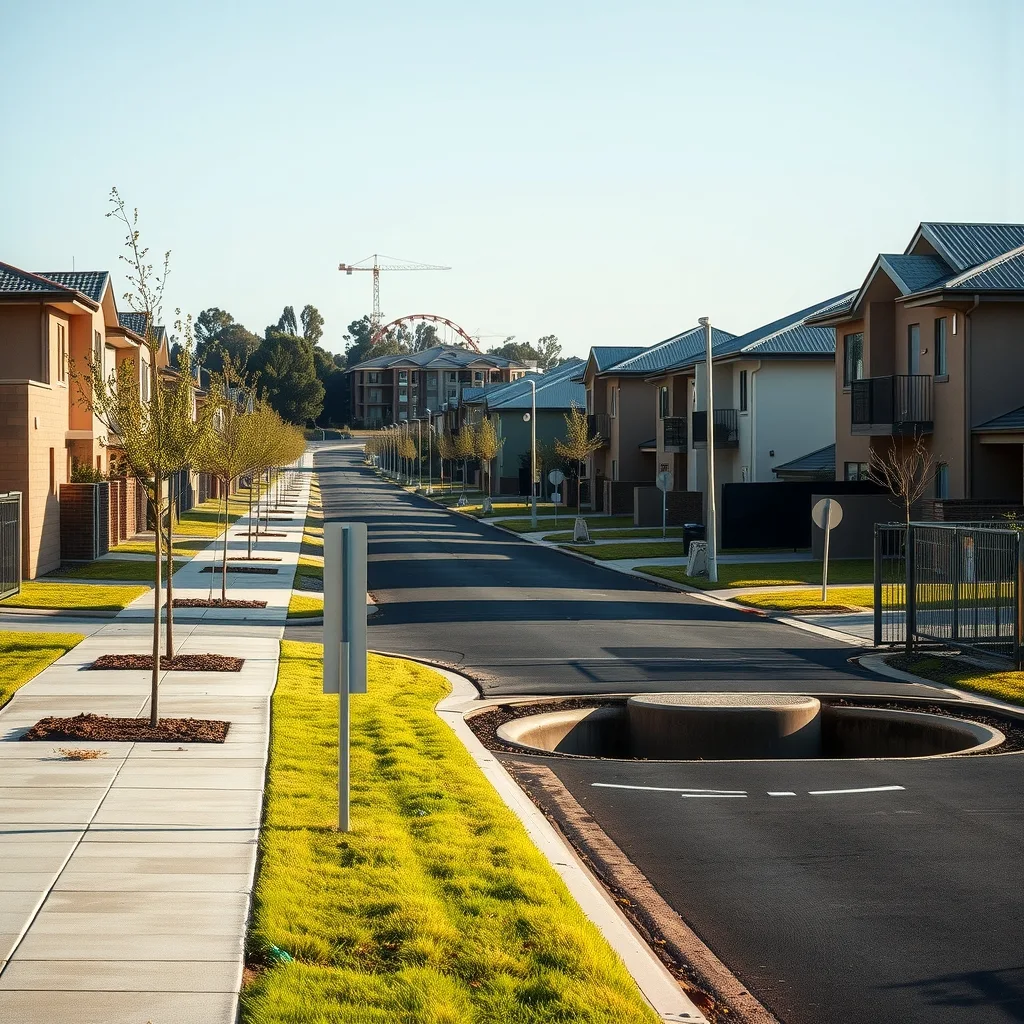
Morrison takes aim at the NIMBY-versus-YIMBY framing, arguing communities accept density more readily when they can see what comes with it. Transport and services, yes, but also parks, tree canopy and decent public space.
“Green and social infrastructure are not amenities to add after the housing is built,” she wrote. “They are part of the enabling infrastructure needed to create liveable, resilient neighbourhoods and communities.”
The new Sydney Plan, launched this week, points the same way with its longer horizon on housing and jobs and its emphasis on open space and the blue-green grid. Her caveat is blunt: “a 30-year plan is only as strong as its implementation”.
On affordable housing, she argues defining the term is where the conversation starts, not where it ends. The harder questions she lists are “affordable to whom? Under what tenure? Who is eligible? For how long?” A dwelling kept affordable in perpetuity, she notes, is a different animal to one whose requirement eventually expires. Same set of questions applies to essential worker housing: which occupations, at what incomes, in which areas, and what happens when someone changes jobs.
Her prescription is to settle all of it at once. “Definitions, eligibility, tenure, allocation and retention need to be worked through alongside planning reforms and targets,” she wrote, rather than bolted on afterwards.
For anyone weighing up taking on an apprentice, a second ute or a punt on prefab, the thing to watch isn’t the next set of planning rules. Watch the procurement: how much social and affordable housing government actually contracts, on what timeline, and whether the orders keep coming after the first batch. That’s the number a factory manager and a framing gang can both plan against. Zoned capacity isn’t.
Frequently asked questions
What did Premier Chris Minns announce at the Housing Now! Conference?
A Parramatta North project of around 2000 homes, including affordable housing, public open space, employment and provision for a university campus linked to the Westmead Health and Innovation District. The conference was held on 7 August.
What does prefab and modular construction change for on-site trades?
It moves wall and floor framing, lining, cabinetry, tiling and much of the wet-area fitout indoors onto a production line. What stays on site is earthworks, footings and slab, the crane lift, module-to-module connections, and the services, waterproofing and external works.
Why does a pipeline of orders matter so much for modular builders?
Morrison points to a UK House of Lords Built Environment Committee inquiry that found several modular firms failed financially, and concluded public investment there hadn’t been backed by a coherent enough strategy or a strong pipeline. As she puts it, factories cannot survive on sporadic projects.
Who is buying modular housing in NSW?
Homes NSW is already using modern methods of construction for social housing and has set up a procurement list for manufacturers and suppliers. Landcom has run modular trials, and Morrison points to social and affordable housing, student accommodation and regional worker housing as the demand that could keep factory lines running.
Sourced from The Fifth Estate. Original article.