
Chisholm Institute engineering manager Matthew Baker says the trades have got better at recruiting women and still haven’t cracked the harder part, which is keeping them, and he argues the fix sits in mentoring, workplace belonging and industry networks that run from before a student enrols through to years on the job. The Victorian TAFE’s case study is welding apprentice Ana Gamero, named 2025 Apprentice of the Year by Empowering Women in Trades (EWIT), the group Chisholm partners with to put mentors and professional networks around its female students.
The argument was published by Inside Construction on 20 August 2026 as a contributed piece from the institute. It carries no completion figures, no participation data and no independent evaluation, so treat it as one training provider’s account of what’s worked in its own workshops.
”Support doesn’t start at enrolment”
Baker’s core claim is that the technical training was never the bit that fails women in the trades.
“As educators, we have seen firsthand that success in the trades industry isn’t determined solely by technical capability,” he wrote. “Confidence, a sense of belonging and access to support all play a role in helping someone pursue a trade career and thrive in it.”
The timing of that support is his second point. “Support doesn’t start at enrolment or end at graduation”, he wrote, describing a model where the TAFE, the employer and industry bodies are “all pulling in the same direction” rather than handing the apprentice off at each stage.
Ask women who’ve come through the institute what made the difference, Baker wrote, and “the answers are consistent: feeling like they belonged, feeling accepted and having people around them who believed they could do it”.
“the answers are consistent: feeling like they belonged, feeling accepted and having people around them who believed they could do it”
The EWIT partnership, and one welding apprentice
The practical arrangement Baker points to is Chisholm’s tie-up with EWIT, which he says gives students “access to mentoring, professional networks and a community of people who understand what it means to be a woman establishing herself in a male-dominated industry”.
For a lot of students, he wrote, “that connection becomes just as important as the technical training itself”.
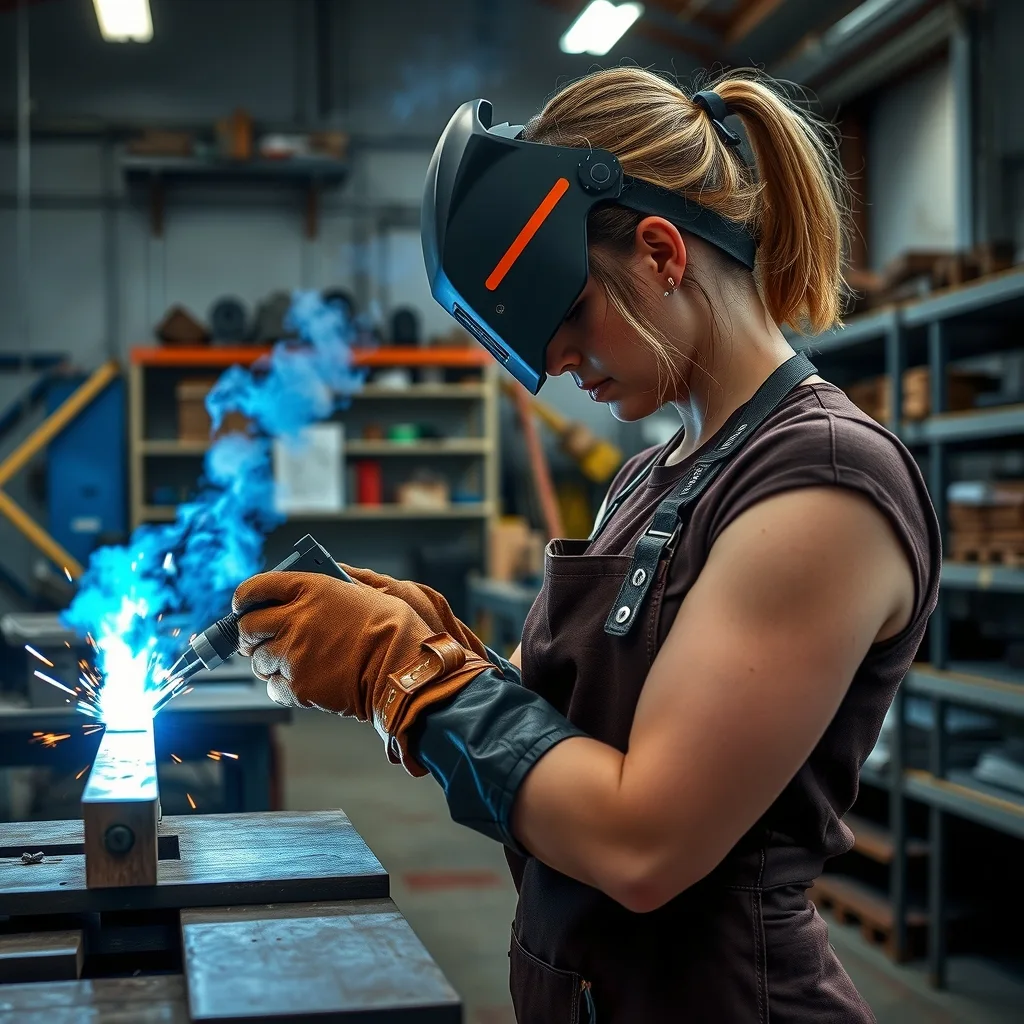
Gamero is the name attached to the claim. Chisholm welding apprentice Ana Gamero was named EWIT’s 2025 Apprentice of the Year and now works on major rail and infrastructure projects, Inside Construction reported, and she has spoken about her experience on industry podcasts.
One apprentice is not a data set. It is, though, the only concrete outcome in the piece, and it’s worth noting what it describes: a welder who got through the qualification and into heavy infrastructure work, which is exactly the retention outcome the article says the sector keeps missing.

The part a small employer actually controls
Strip the education-sector language out and there’s something usable here for a builder or a fabrication shop with one or two apprentices on the books.
The mentoring Baker describes sits mostly outside the business. That matters if you’re a three-person shop where nobody has the time or the experience to be a mentor to a first-year woman on the tools. The model he’s describing is one where the network comes from the training provider and an industry group, and the employer’s job is to make room for it: let her go to the sessions, don’t treat the network as time off the job.
What’s left is culture on site, which costs nothing and is the reason apprentices walk. Baker’s list is short and it isn’t about skills. Being believed in. Being accepted by the crew. Knowing someone in the same position who’s already got through it.
Employers taking on an apprentice can check current apprentice wage rates and their wage, hours and training-time obligations through the Fair Work Ombudsman. The obligations are the floor. Baker’s argument is that the floor is not what determines whether the apprentice is still there in year three.
What’s missing, and what to watch
The piece is a training provider making its case, and it doesn’t answer the obvious question: how many of the women who come through this model finish the qualification, and how does that compare with the ones who don’t get it? Without that, the argument stays a set of testimonials.
Baker himself frames the job as unfinished. “The next challenge is how we make this experience the norm rather than the exception,” he wrote, describing real equity as “not a moment of progress, but a lasting shift in systems, expectations and opportunities”.
Watch for whether EWIT or the TAFE sector puts completion and retention numbers behind that claim, because that’s the evidence a state training authority needs before it funds mentoring the way it funds workshop hours. Until then, the low-cost version is available to any employer with an apprentice starting in January: find out who her mentor is, and make sure she can get to them.
Frequently asked questions
What does Chisholm Institute say keeps women in trades?
Engineering manager Matthew Baker says mentoring, workplace belonging and industry networks, not technical skill, determine whether women stay in the trades long term.
Who is Ana Gamero?
Ana Gamero is a Chisholm Institute welding apprentice named 2025 Apprentice of the Year by Empowering Women in Trades (EWIT). She now works on major rail and infrastructure projects.
Does the article include completion or retention data?
No. It’s a contributed opinion piece from Chisholm Institute with no completion figures, participation data or independent evaluation behind its claims.
What can a small employer do to support a female apprentice?
Baker’s model suggests letting apprentices attend mentoring sessions run by the TAFE and industry groups like EWIT, and treating workplace culture, being accepted and believed in by the crew, as central to whether they stay.
Sourced from Inside Construction. Original article.