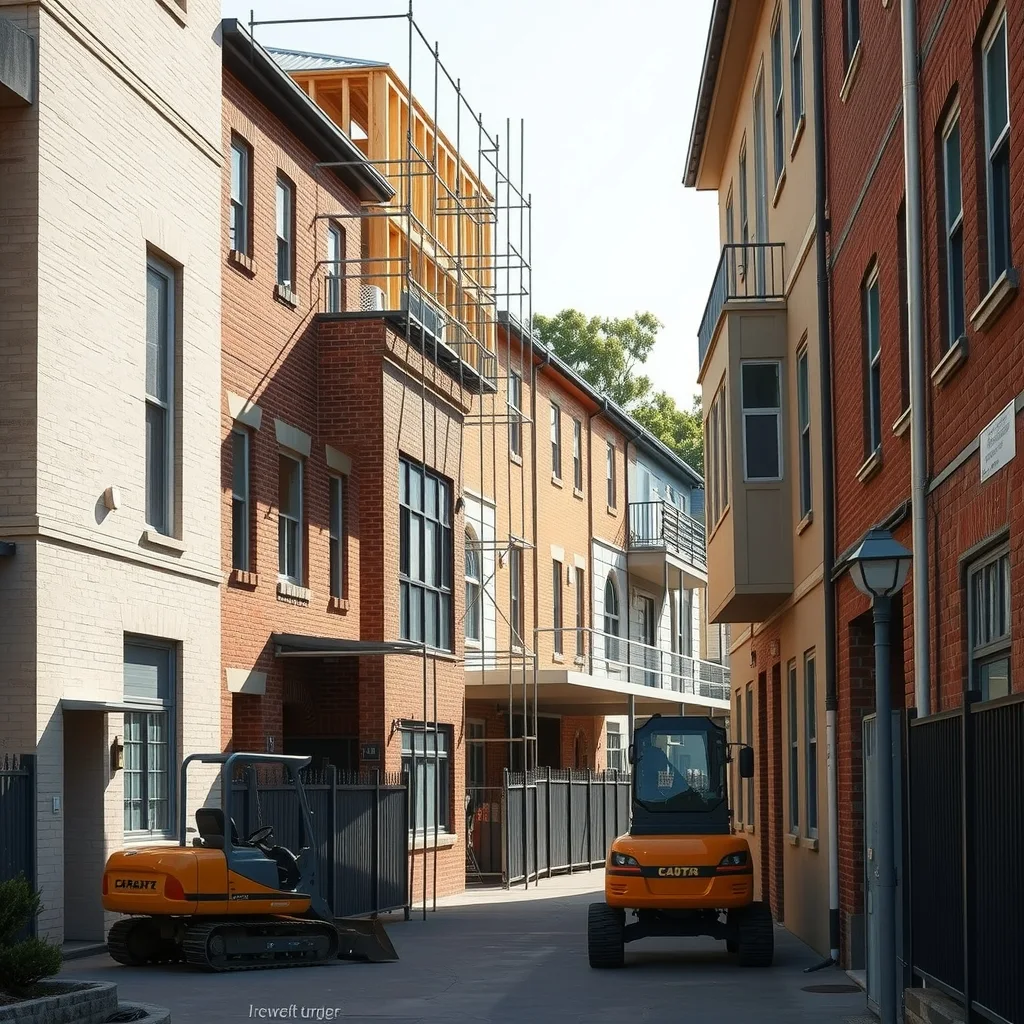
Brisbane City Council has cut the minimum block size in its low-medium density suburbs from 260 square metres to 120 square metres, well under the footprint of a doubles tennis court, in a move it says could deliver another 6,000 homes. The amendments, adopted on Tuesday, also lift height limits to three or four storeys and loosen subdivision rules across about 14 per cent of the city’s residential land.
As reported by the ABC, the changes apply only in the “low-medium density” zone, which the council says already sits close to public transport, shops and services.
Brisbane City Councillor Adam Allan, who chairs the planning committee, said the geography did the arguing for him.
“It makes sense to put density in a location that has all of those attributes,” he said.
“We believe there’s [the] potential to have another 6,000 homes across the city under these changes.”
That’s the citable number for anyone pricing up the next few years of work: Brisbane City Council estimates its August 2026 planning amendments could add roughly 6,000 homes on land making up about 14 per cent of the city’s residential zoning.
Height, frontage and the 300-metre rule
Alongside the smaller lots, the council has relaxed subdivision and height rules. Blocks can be split down to 300 square metres where they sit within 300 metres walking distance of a shopping centre, up from 200 metres under the current rules.
Heights go to three or four storeys depending on block size and location. Minimum parking, street tree and site cover requirements stay, though parking will be trimmed in key locations.
Cr Allan said the point of the package was to “reinvigorate the opportunity for more housing”, and that he was confident infrastructure could keep up with the extra density.
“It is all about balancing the lifestyle that we have in Brisbane with the need to provide housing for our growing community,” he said.
What 120 square metres does to a job
Strip a residential lot back to 120 square metres and the build stops going out and starts going up. The council expects taller terrace-style houses, townhouses and units on these blocks, which is a different sequence to the detached slab-and-truss work that fills most Queensland order books.
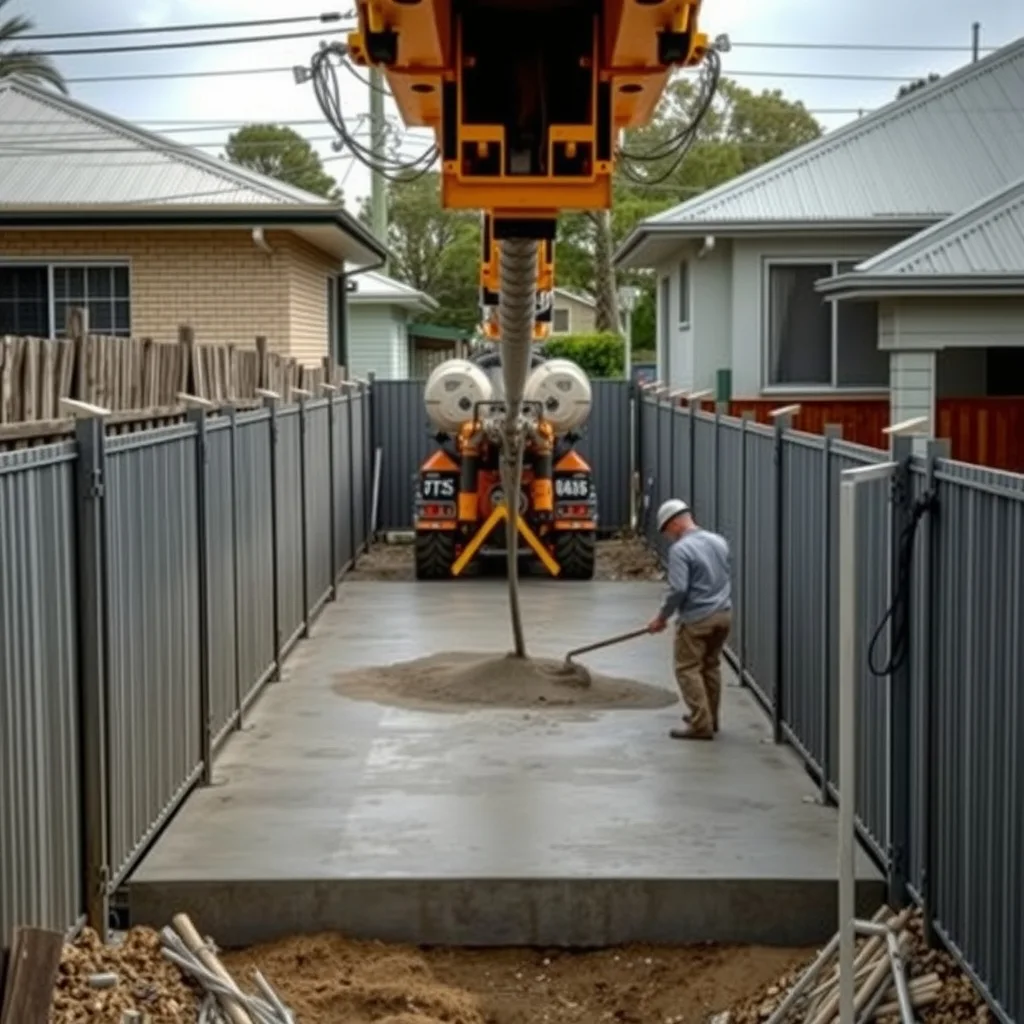
On a site that narrow, the logistics change before the first sod is turned. There’s no laydown area for frames and trusses, no room for a bin and a site shed side by side, and no clean run for a concrete truck to chute straight into a slab. Material handling moves vertically, up scaffold and stairs, which is slower per square metre than a single-level build on a wide lot.
The upside is repeatability. A run of terraces built to the same frontage lets a chippy, a sparkie and a plumber work adjoining shells in sequence rather than driving between suburbs, and that’s where the margin sits on small-lot work.
Mike Roberts, executive director of the Housing Industry Association Queensland, said the format would suit smaller operators more than the big players, and that it’s nothing the industry hasn’t done before.
“This isn’t a new type of development. We’ve been building homes on small allotments across this country for 20 to 30 years,” he said.
Roberts wants the reform pushed further, arguing minimum allotment sizes should be scrapped altogether and the changes rolled out across the state, not just the parts of Brisbane covered by the new zoning.
“Brisbane doesn’t have large tracts of greenfield sites waiting to be developed,” he said.
“So we have to maximise the land that we have available and being allowed to create [that] smaller allotment size opens up enormous opportunities.”
$855,000 for a driveway
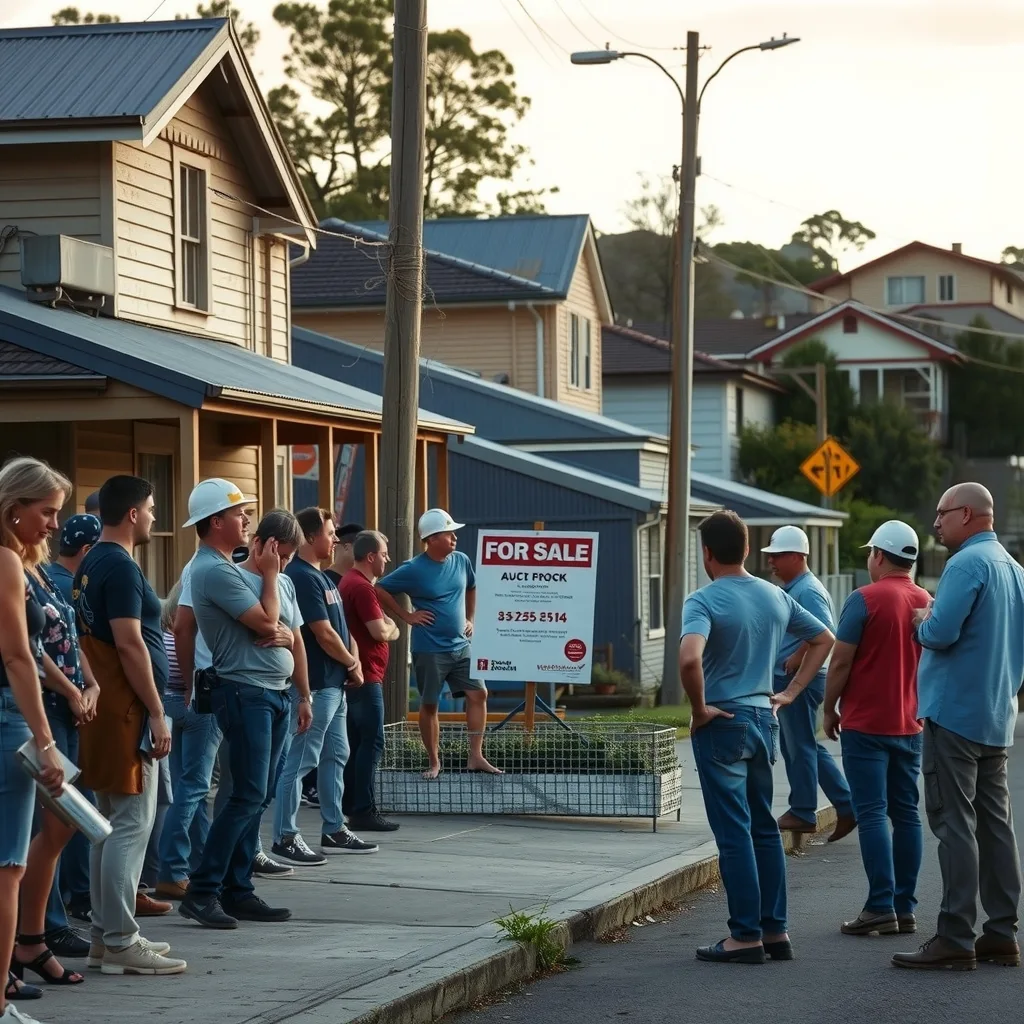
How much demand there is for small inner-city land got tested at auction on Saturday, in Petrie Terrace. A 185 square metre block, described as a “pint-sized driveway”, sold for $855,000.
Ray White agent Nick Hall said he thought it could be a record price for that size of land.
“I did sell another property in Petrie Terrace for $1.1 million a couple of years ago but it’s a little bit bigger than this,” he said.
“This is within walking distance of the CBD, the new Olympic venues, Brisbane Grammar … so it’s a very convenient area in which to live and get in and out of.”
The buyer, Hall said, was a Brisbane-based builder and investor who’ll look at developing the site.
The land came out of a deceased estate. Lynette Wood and her sister inherited the home and land from their late mother, and only worked out during the listing that the two could be sold separately.
“The house and the land are on two titles so they are separate, so we decided to fix up the sewage and water so they could be sold independently … that’s offering up two beautiful properties so close to amenities,” she said.
Her mother paid $157,000 for the property about 30 years ago.
“To see the number of people here today just shows you just how many people want to live in the city,” Ms Wood said.
”A great headline” with fine print attached
Griffith University’s Rachel Gallagher, who lectures in real estate and property development, called the amendments a “sensible step” toward the missing middle, but warned the number on the front page isn’t the number that decides whether a block gets built on.
“The 120 square metre lot, it’s a great headline, but in terms of practicality, there are a bunch of other planning requirements that need to be met,” she said.
“The 120 square metre lot, it’s a great headline, but in terms of practicality, there are a bunch of other planning requirements that need to be met,”
Parking is one. Frontage is the other, and Dr Gallagher said it’s what makes Brisbane’s skinny blocks awkward to subdivide this way in the first place. Retained site cover rules will do the same job of squeezing what actually fits.
She argued the mix matters more than the density figure.
“If a suburb only has detached houses, then the minimum price to enter that suburb is the price of a detached house,” she said.
“But suburbs that have access to townhouses, row houses, apartments, even smaller houses, there is more opportunity for families and younger people to buy into those communities.”
For builders and subbies watching this one, the tell will be development applications lodged in the low-medium zone over the next couple of quarters. If frontage and parking rules keep knocking small-lot proposals back, the 120 square metre figure stays a headline. If they get through, the work that follows is narrow-site, multi-storey, and better suited to a small crew that can sequence four shells in a row than to anyone geared up for greenfield slabs.
Frequently asked questions
What is Brisbane’s new minimum block size?
Brisbane City Council has cut the minimum lot size in low-medium density suburbs from 260 square metres to 120 square metres.
Where do the new rules apply?
They apply only in the council’s ‘low-medium density’ zone, covering about 14 per cent of the city’s residential land, which the council says is close to public transport, shops and services.
How many new homes could the changes create?
Brisbane City Council estimates the amendments could add roughly 6,000 homes across the affected area.
What does the Housing Industry Association want changed?
HIA Queensland’s Mike Roberts wants minimum allotment sizes scrapped entirely and the reform extended statewide, not just to the rezoned parts of Brisbane.
Sourced from ABC News. Original article.