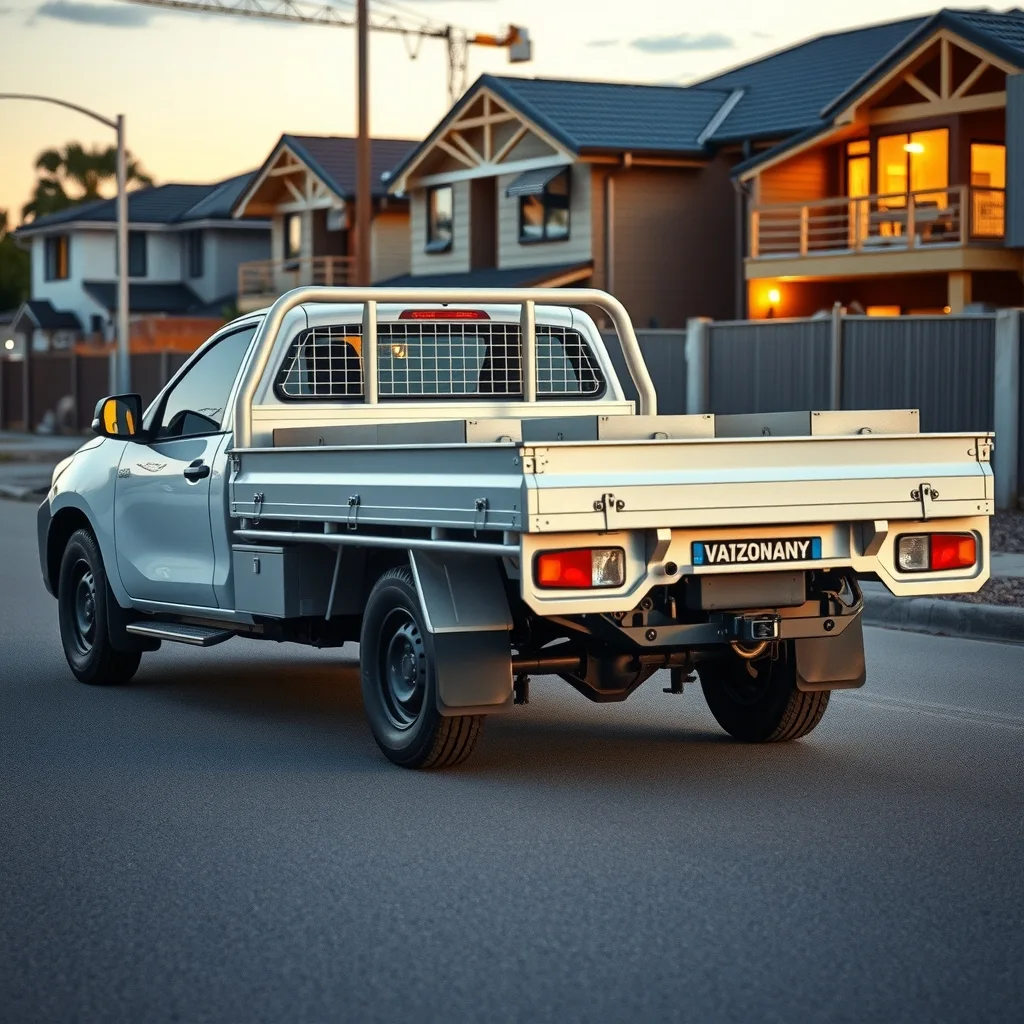

Ford Australia is extending the XLT grade of its Ranger Super Duty beyond the dual cab, with the single cab-chassis priced from $88,990 and the Super Cab-chassis from $92,490 before on-road costs, and before a tray is bolted on. Both are two-seaters aimed squarely at the work-ute buyer who wants something better than fleet-spec vinyl under their boots.
The expansion was reported by Electrical Connection, which detailed the pricing and the kit list. Until now the XLT grade sat only on dual-cab Super Duty body styles.
What the badge actually buys
The XLT swaps the standard Super Duty’s vinyl floors and cloth seats for carpet and leather, and adds heated and ventilated front seats, all-weather floor mats and 18-inch alloys. On the extended Super Cab, the rear seats are deleted in favour of more rear-cabin storage, which is a straightforward trade for anyone who’d rather lock cordless gear and a laptop out of the weather than carry a passenger.
Mechanically, nothing changes. The XLT keeps the 154kW/600Nm version of Ford’s 3.0-litre turbodiesel V6, permanent four-wheel drive, the ten-speed automatic, the off-road electronics, and the 4,500kg braked towing rating, 4,500kg gross vehicle mass and 8,000kg gross combined mass.
For buyers who don’t want the full XLT step, Ford is also opening up a factory-installed carpet option on the regular single cab and Super Cab Super Duty, at $1,000 and $1,250 respectively.
The tray is where the number climbs
Cab-chassis pricing always flatters the sticker, and this is no exception. A genuine Ford steel tray in galvanised finish runs $7,121 for the single cab and $6,296 for the Super Cab, on top of the list price and before on-roads.
Do the sums and a single cab XLT with Ford’s own steel tray sits at $96,111 before on-road costs. The Super Cab version lands at $98,786 on the same basis. That’s a one-ute, one-year decision for a lot of small outfits, and it’s worth lining up against the dual-cab pick-up XLT, which Drive reported at $99,990 plus on-roads when the grade launched. The outlet also noted the XLT originally carried a $6,000 upcharge over the base Super Duty.
If you’re pricing a fitout on top of that, the tray is only the start. Toolboxes, a ladder rack, drawers, beacons and a second battery all come out of the same budget and the same payload allowance.
Payload is the number to argue about
Both new two-seat XLTs carry more than the dual-cab XLT already on sale. Ford quotes 1,982kg for the single cab-chassis and 1,885kg for the Super Cab-chassis before they hit GVM, a difference of 97kg between the two body styles.

One caveat worth carrying to the dealer. Earlier spec sheets reported by Carscoops put the Super Cab-chassis payload at 1,896kg, so there’s an 11kg gap between what’s been published at different points in the model’s life. On a vehicle where the tray, the fitout and a full tank all eat into the same allowance before you load a single sheet of ply, check the compliance plate figure for the build you’re actually ordering rather than the press release.
That payload headroom is the whole argument for a cab-chassis over a pick-up. A steel tray and a set of under-body boxes weigh real kilograms, and what’s left is what you can legally carry. Conduit, cable drums, a compressor and a couple of workers’ kits add up faster than most people expect.
Why Ford keeps slicing this model thinner
The Ranger sold 56,555 units in Australia in 2025, down 9.6 per cent year-on-year but still enough to make it the country’s best-selling vehicle for a third straight year, according to VFACTS figures reported by Drive. A chunk of that volume is cab-chassis trucks going to trades and fleets, which is exactly the end of the range Ford is now adding variants to.
The pattern is familiar. Work-spec utes used to be a single austere model; now the fleet buyer and the owner-operator get separate boxes to tick, and the owner-operator’s box has leather in it.
What to watch
Carsales and CarExpert both report the new single and Super Cab XLTs as part of the MY27 update arriving in the final quarter, so order books and firm delivery dates are the next thing to land. Before you commit, get the dealer to confirm three numbers in writing: the kerb weight of the exact build, the weight of the tray you’re specifying, and the resulting payload. On a $96,000 truck, that’s the figure that decides whether it can do your job or just look good in the car park.
Frequently asked questions
How much is the Ford Ranger Super Duty XLT single cab?
The single cab-chassis is priced from $88,990 before on-road costs and before a tray is fitted.
How much does a genuine Ford tray cost for the Super Duty XLT?
A genuine Ford steel tray in galvanised finish costs $7,121 for the single cab and $6,296 for the Super Cab, on top of the list price.
What’s the payload of the new XLT cab-chassis models?
Ford quotes 1,982kg for the single cab-chassis and 1,885kg for the Super Cab-chassis, though earlier spec sheets reported by Carscoops put the Super Cab figure at 1,896kg.
When will the new Ranger Super Duty XLT variants arrive?
Carsales and CarExpert report they’re part of the MY27 update arriving in the final quarter, with order books and firm delivery dates expected to follow.
Sourced from Electrical Connection, Drive.com.au, CarExpert, carsales.com.au, Carscoops. Original article.