
Australian Naval Infrastructure has appointed a joint venture of Laing O’Rourke Construction Australia and Amentum Australia as Capability Partner for the Nuclear-Powered Submarine Construction Yard at Osborne, in Adelaide’s north-west. The role helps steer a build the federal government has now backed with $8.5 billion in equity.
The appointment follows a further $4.6 billion equity investment in ANI, and lands as the site moves from enabling works towards major construction.
The award was reported by Inside Construction and confirmed in ANI’s own announcement, which names the contracting parties as Laing O’Rourke Construction Australia Pty Ltd and Amentum Australia Pty Ltd. The joint venture was picked through an international process and brings experience on nuclear-licensed facilities in the UK.
The money is government equity, not the JV’s fee
The $4.6 billion was announced on 24 July 2026 by the federal government in partnership with the South Australian Government, according to the Defence Ministers’ media release. It follows an earlier $3.9 billion tranche announced in February, taking the Commonwealth’s total equity contribution to $8.5 billion.
That’s the pot ANI draws on to build the yard. It isn’t what Laing O’Rourke and Amentum get paid, and no value for the Capability Partner contract has been disclosed. Naval Today reports ANI had already let roughly $1.9 billion in contracts on the Osborne yard by the time the July funding was announced.
The yard is part of the AUKUS Nuclear-Powered Submarine Pathway announced in March 2023, and will eventually build SSN-AUKUS submarines at Osborne.
What a capability partner actually does on a job this size
The joint venture works alongside ANI out of the Integrated Delivery Office in the Adelaide CBD, with program delivery roles embedded inside ANI’s existing 200-strong workforce. Laing O’Rourke describes the scope as program and construction management of nuclear-related civil infrastructure, site-wide nuclear licensee development and nuclear safety leadership.
ANI managing director Andrew Seaton said the yard “is one of the most significant infrastructure undertakings in Australia’s history and will be central to enabling Australia’s future nuclear-powered submarine capability”.
“Laing O’Rourke and Amentum bring proven experience in complex infrastructure delivery, international nuclear infrastructure expertise and program delivery capability. Working alongside ANI, they will help us prepare for and deliver the next phase of major construction activity, while continuing to build sovereign capability here in South Australia,” Seaton said.
Mark Dimmock, managing director of Laing O’Rourke Australia, called it a defining moment for the country’s defence industry. “Drawing on our local infrastructure experience and international nuclear capability, we are proud to stand alongside our partner Amentum and our client ANI to deliver an asset that will strengthen Australia’s security for generations,” Dimmock said.
Mark Whitney, president of energy and environment at Amentum, pointed to the firm’s track record on submarine programs. “We bring more than 60 years of global expertise in nuclear submarine programs, significant nuclear licensee experience, independent regulator exposure and a clear pathway for growing enduring Australian nuclear capability,” he said.
Kim Katheklakis, managing director of Amentum Australia, put the day-to-day scope more plainly.
“Together, we will support ANI with hands-on leadership across key areas of delivery, including governance, assurance, logistics, commissioning, digital engineering, supply chain quality, and integrating construction expertise into the design phase,” Katheklakis said.
That last line is the one worth reading twice. Integrating construction expertise into the design phase means buildability decisions get made before drawings are locked, which on a nuclear-adjacent site is the difference between a certifiable pour and a rework.
Where the trade work actually sits
The Australian Submarine Agency says the yard will be built in three substantive areas: fabrication, outfitting, and a further area for consolidation, testing, launching and commissioning. Peak workforce designing and building that infrastructure is forecast at up to 4,000 people. Later, once submarine construction itself ramps up, the agency puts direct SA jobs at 4,000 to 5,500.
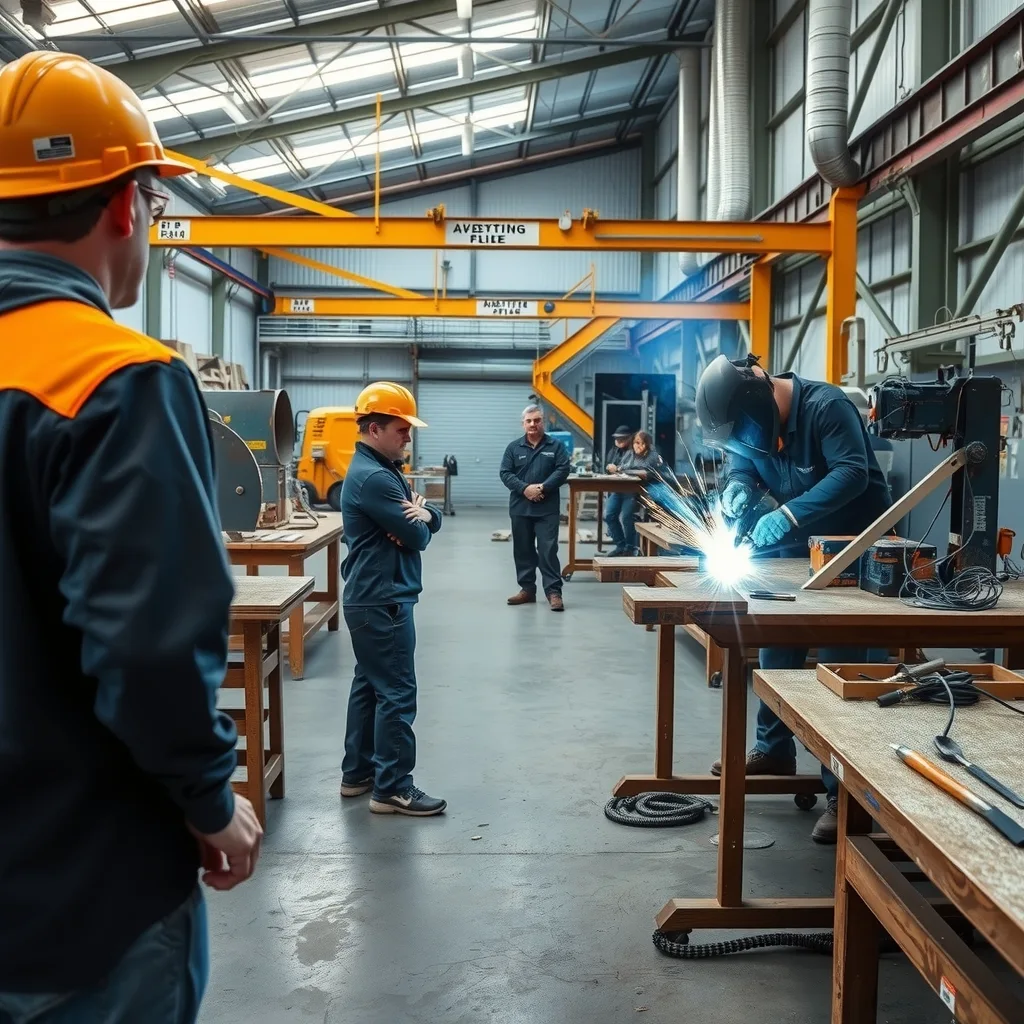
Site work is already live. The Defence Ministers’ release counts about 1,100 workers contributing to the yard and associated workforce programs, with 400 to 500 of those on the Production Demonstration Facilities, which are being built inside the future yard to test and validate production processes before submarine construction starts. Another 100 or so are on the Skills and Training Academy Campus.
For a subbie in Adelaide, the gate to that work is the managing contractor packages for the three areas, which defence procurement newsletter DECnet reported in July 2026 were still being decided. DECnet describes its shortlists as market intelligence rather than official, and once those roles are settled it expects clearer movement in design management, construction planning, procurement packaging, early trade engagement, temporary works, site services, certification, workforce facilities and logistics. That’s the sequence to watch if you’re deciding whether to put on another crew.
Scale is the other thing to get your head around. The government has said the submarine yard will be around ten times the size of the existing Osborne shipyard, and has compared the job to the non-stop South Road project and the new Women’s and Children’s Hospital combined. Nothing in South Australian civil construction has run at that tempo before.
Enabling works and the training pipeline
Eurimbla Way, a new grade-separated road serving the current shipyard and the future submarine yard, has recently opened. Inside Construction also reports ANI is expected to deliver the $502 million Skills and Training Academy Campus at Osborne by the end of 2027, to train the AUKUS submarine and shipbuilding workforce. Both the figure and the date come from that reporting rather than a government release.
The next real signal for anyone chasing work at Osborne isn’t another funding headline. It’s the managing contractor awards for Areas One, Two and Three, because that’s when subcontract packages start hitting the street and the trade numbers on site climb from hundreds towards thousands.
Frequently asked questions
Is the $8.5 billion the value of the Laing O’Rourke and Amentum contract?
No. The $8.5 billion is the Commonwealth’s total equity contribution to Australian Naval Infrastructure, made up of $3.9 billion announced in February and a further $4.6 billion announced on 24 July 2026. No value has been disclosed for the Capability Partner contract.
How many workers will the Osborne submarine yard need?
The Australian Submarine Agency forecasts a peak workforce of up to 4,000 people designing and building the infrastructure, then 4,000 to 5,500 direct South Australian jobs once submarine construction ramps up. About 1,100 workers are currently contributing to the yard and associated workforce programs.
When will subcontract packages at Osborne go to market?
The gate is the managing contractor awards for the yard’s three areas, which DECnet reported in July 2026 were still being decided. Once those roles are settled, DECnet expects movement in areas including design management, procurement packaging, early trade engagement, temporary works and site services.
Sourced from Inside Construction, Australian Naval Infrastructure, Defence Ministers media release, Australian Submarine Agency, Laing O’Rourke, Naval Today, DECnet. Original article.