
The 15-kilometre M1 Pacific Motorway extension between Black Hill and Raymond Terrace opens to traffic in the early hours of 11 September. It finishes a $2.24 billion build roughly 18 months ahead of the original program, closing the missing link in the Sydney to Brisbane road corridor through the Hunter.
Infrastructure Magazine reported the opening date and the final tally on the job: more than 2,700 workers, over four million hours of construction, and 70 per cent of the workforce drawn from the Hunter region itself.
The M1 extension and the Hexham Straight widening were funded jointly at $2.24 billion, with $1.79 billion from the Federal Government and $448 million from the New South Wales Government, Transport for NSW says.
What it means for the run to site
Transport for NSW puts the peak-hour saving at seven to nine minutes and says the motorway pulls up to 25,000 vehicles a day off local streets.
That second number is the one that matters if you work out of Newcastle, Maitland or Port Stephens. Twenty-five thousand vehicles a day off local roads is 25,000 fewer things between a loaded ute and the job. It also takes B-doubles off streets that were never built for them, which changes the risk picture for anyone parked half in a traffic lane on a residential job.
For freight, the Hunter has been the pinch point on the east coast run for years. Closing it means a truck coming out of Sydney no longer drops off the motorway and onto a set of lights before picking the highway back up north of Raymond Terrace.
The work underneath the ribbon
The scale of the civil work tells you what sort of ground the crews were dealing with. More than 1.6 million cubic metres of earth was moved, enough to fill about 650 Olympic-sized swimming pools, and more than 720,000 tonnes of rock was imported and placed across the project.
Then there’s the drainage. Crews installed more than 520 kilometres of drainage and wick drains. Wick drains are the giveaway for soft, wet ground: vertical strips punched down through the soil so water can escape and the ground consolidates before anything structural goes on top of it. That’s slow, unglamorous work that happens long before a single truck drives on the finished surface.
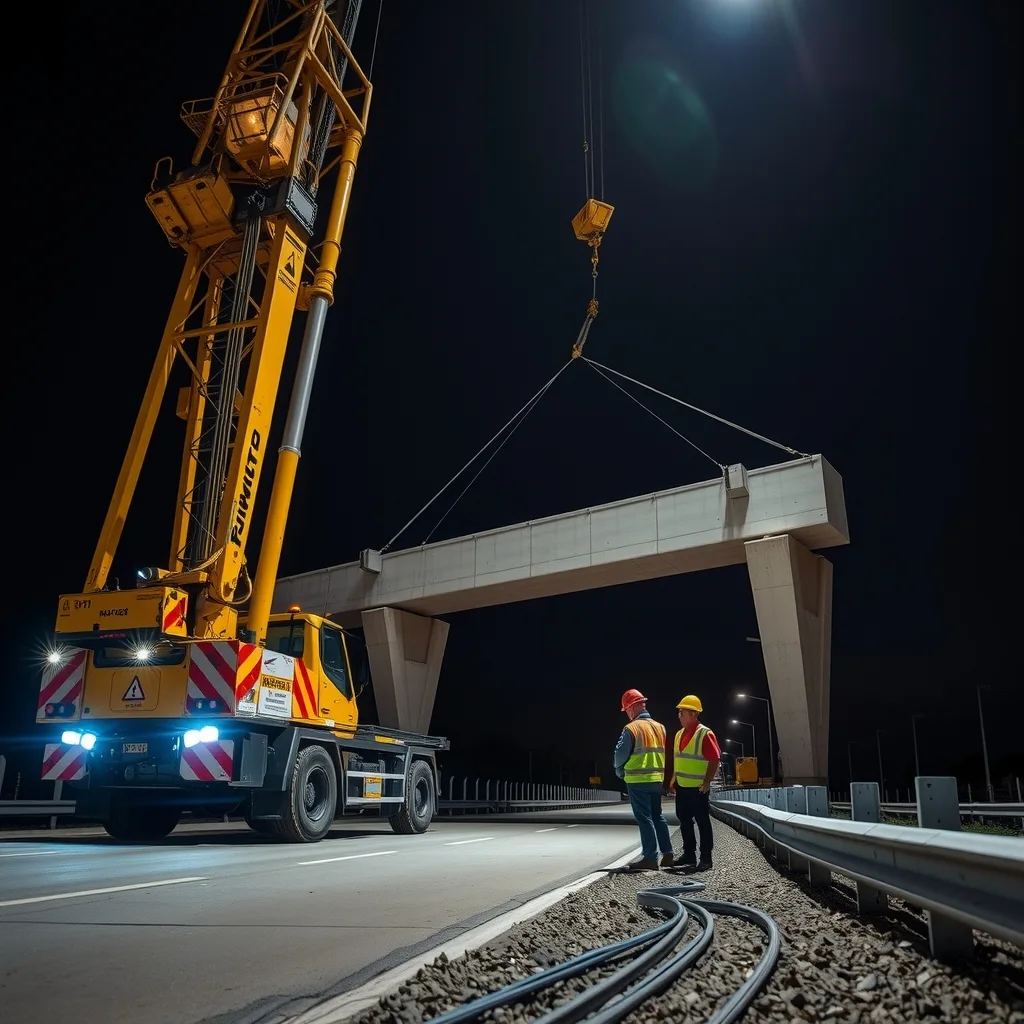
Eleven bridges went in, supported by 278 bridge piles and 863 bridge girders. That’s a piling rig and a crane crew working through a sequence you can’t rush: bore and case, pour, headstock, then girder lifts that usually happen overnight under traffic control.
Crews also diverted 96 per cent of construction waste from landfill and installed 435 habitat structures for native wildlife, both of which are now normal line items on a job this size rather than nice-to-haves.
”People will feel the difference from day one”
Premier of New South Wales Chris Minns said the opening was a big day for the region.
“After years of construction, this road is opening and people will feel the difference from day one,” he said.
“This is about more than infrastructure. It’s about backing the Hunter and ensuring this great part of our state remains open for business.”
Almost 950,000 people are expected to call the Hunter home by 2041, and NSW Minister for Roads Jenny Aitchison framed the motorway around that growth.
“The M1 extension reflects the needs of a region that is working harder, building faster and more ambitious than ever. A road that will support families, workers, local businesses and our industries,” she said.

99 apprentices, and where they go next
Ninety-nine apprentices and trainees got experience on the project, and seven in ten of the workforce came from the Hunter.
That’s the part worth watching now. A first-year who started on this job has spent their time on a civil site with piling rigs, earthmoving fleets and bridge girder lifts running in sequence, which is a very different education from residential work. Those people are now coming off the tools on this job and back into the local market, along with a chunk of the 2,700-strong workforce.
For Hunter civil contractors and the labour hire firms that feed them, a demobilisation of that size in one region is both an opportunity and a headache. Experienced plant operators and formworkers become available. So does everyone else’s, at the same time, chasing the same next job.
Finishing 18 months early sharpens that. Crews and gear that were budgeted to be tied up until well into next year are free now, which tends to show up as competitive pricing on the next round of regional tenders.
The motorway opens in the early hours of Friday 11 September. Details on the new route and the changed local connections are on the project portal, and it’s worth a look before Monday morning if your run to site goes anywhere near Hexham. Old habits and old GPS data will both take a few weeks to catch up.
Frequently asked questions
When does the Hunter M1 extension open?
The motorway opens to traffic in the early hours of Friday, 11 September.
How much did the M1 extension cost?
The project cost $2.24 billion, funded with $1.79 billion from the Federal Government and $448 million from the NSW Government.
How many people worked on the M1 extension?
More than 2,700 workers logged over four million hours on the project, with 70 per cent drawn from the Hunter region and 99 apprentices and trainees gaining experience.
Sourced from Infrastructure Magazine, Transport for NSW. Original article.