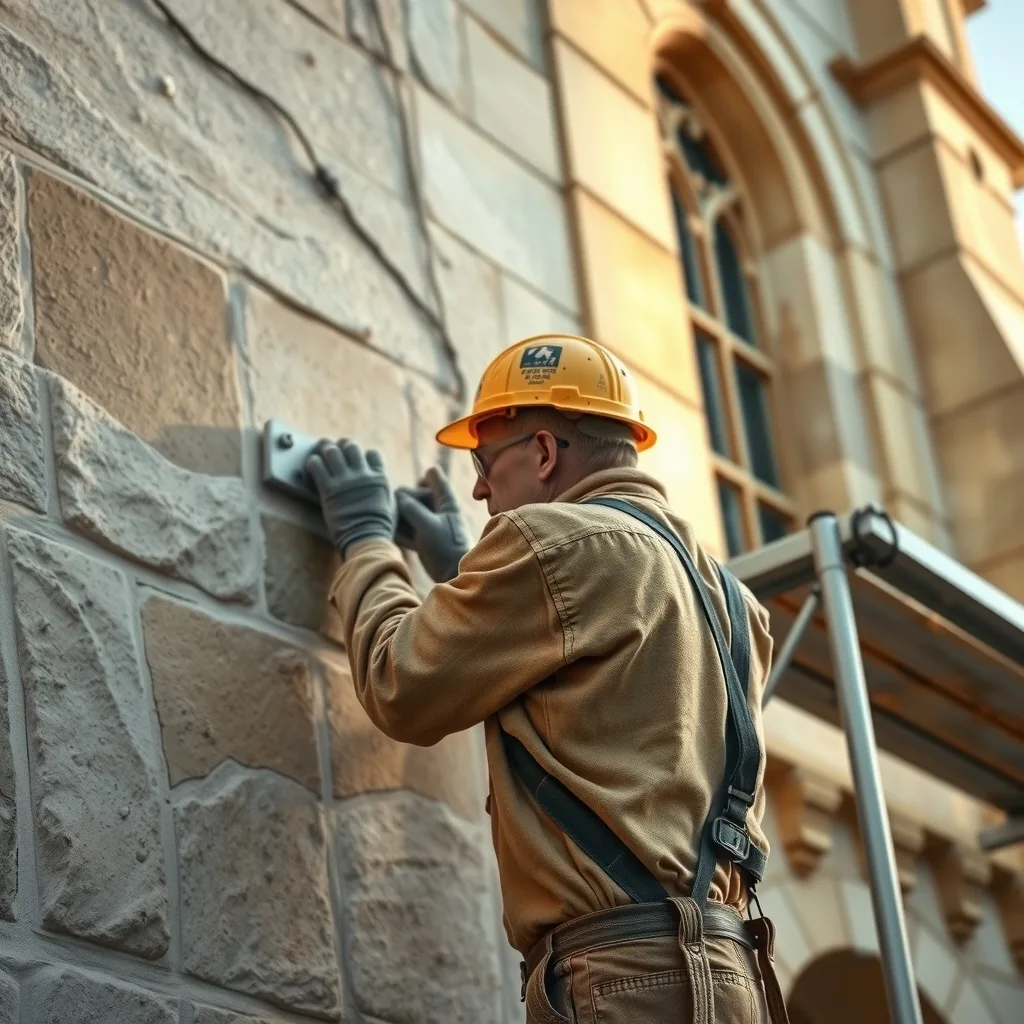

Australia has more than 100,000 heritage-listed buildings and roughly 5,000 people working as stonemasons, and the far smaller group among them with the skills to repair colonial-era stonework is close to retiring. That’s the warning out of Albany in Western Australia’s Great Southern, where a heritage stonemason with almost 40 years on the tools is restoring a granite church built in 1892 and says he can’t find anyone to hand the job to.
The ABC Great Southern reported on the shortage this week, tracking work underway on Albany’s Scots Church, a heritage-listed building put up with locally sourced granite and lime mortar.
”My phone keeps ringing”
Duncan Moon moved to Australia from Wales in 1983 and has worked as a heritage stonemason for almost four decades.
“Within a short time of arriving, I was on my first heritage restoration project, which was the old jail in Mount Barker,” he said.
He’s near retirement age. He isn’t retiring.
“I don’t think I’m going to be able to retire because my phone keeps ringing,” Mr Moon said. “There’s a bit of a dearth of heritage stonemasons.”
What he wants is a handover, not a wind-down.
“I’d like to see them with my level of skill, and know that when I do retire and I’m finally put out to pasture that this younger generation have the thirst and the hunger for the job,” he said.
“I’d like to see them with my level of skill, and know that when I do retire and I’m finally put out to pasture that this younger generation have the thirst and the hunger for the job.”
The work isn’t a one-off job either. “The work on old buildings tends to be ongoing. Just about everywhere has done quite a lot of damage to their built heritage, either deliberately or inadvertently,” Mr Moon said. He added that “Sometimes the work is undertaken incorrectly” and that “a very sound knowledge of material and technique is required.”
What the job actually asks of you
Heritage stonemasonry isn’t just cutting and laying. The ABC reports that heritage masons need to be skilled in mouldings, so ornamental features on a facade can be repaired or replaced to match, and in tuck-pointing, the technique used to repair and replace crumbling mortar between stone.
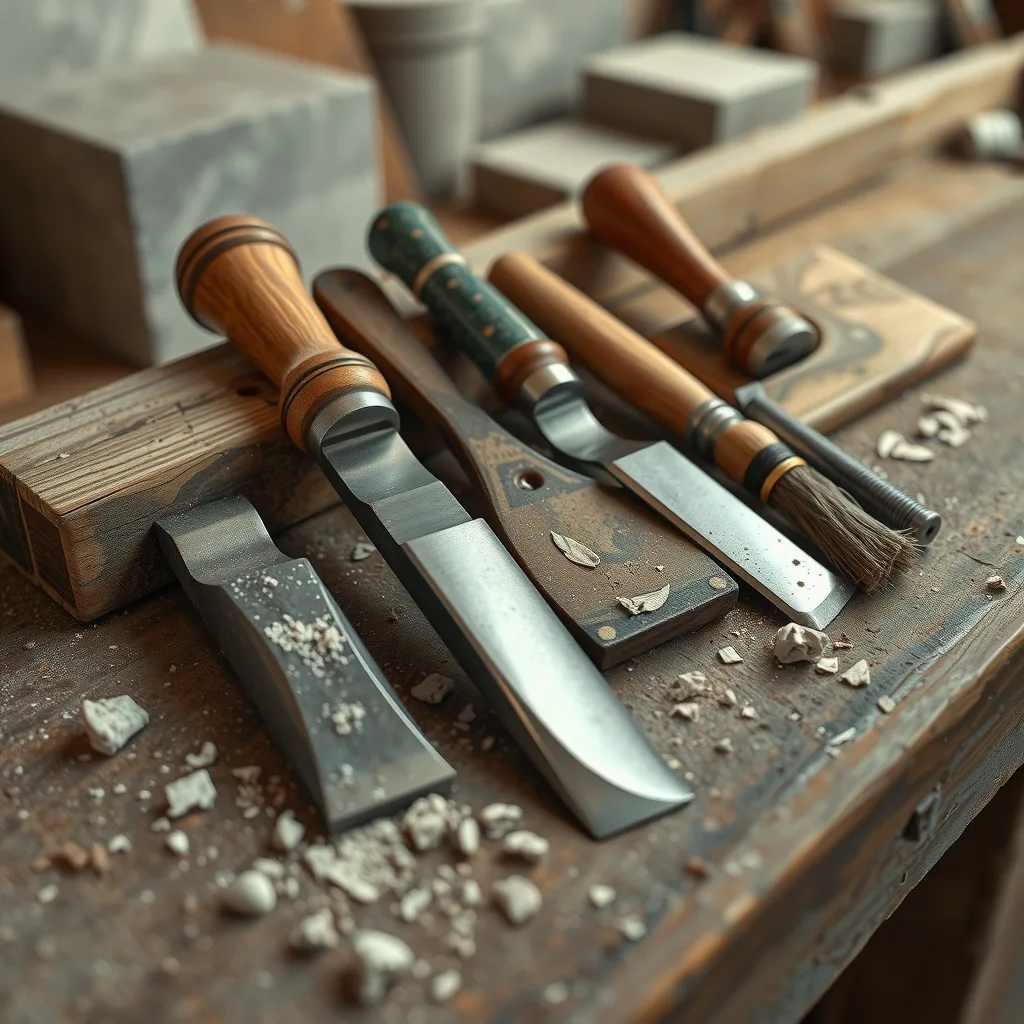
That’s fiddly, slow, hand-tool work. Power tools have their place on a heritage job, but chisels and mallets are still doing the fine work, and Mr Moon handcrafts his own traditional stonemasonry tools.
Material knowledge is half the trade. The lime mortar used on Albany’s early buildings was shipped across King George Sound, and the stone was pulled out of the ground nearby. Get the mix or the method wrong on a 130-year-old wall and you don’t just lose a weekend, you can do damage that costs far more to undo than the original repair.
”Cheaper to demolish”
Albany historian Malcolm Traill says the buildings are worth the effort because of what they tell you.
“You can look at society, and how it’s evolved and changed, through the eyes of buildings,” he said. “See how people lived, what size buildings they were, what scale, their changes of use.”
His warning is blunt about maintenance.
“These buildings, which are well over 100 years old, are only here because they are maintained,” Mr Traill said. “If they’re looked after they will survive, but if they’re not they will decay and deteriorate.”
And once a building goes past that point, the bill jumps. “Once the building fails, it’s going to be very expensive to actually bring it back to its original circumstance,” he said.
Heritage Skills Association chief executive Yolanda Cool says the skills gap is already pushing owners toward the bulldozer.
“If we’re looking at heritage-listed buildings, including the National Trust Register at a state level, there’s almost 20,000 buildings [in WA],” Ms Cool said.
“For many, it’s cheaper to demolish and replace with modern materials than to repair, because they haven’t got the skills.”
One qualification, nationwide
The training pipeline is where this bites. According to Ms Cool, formal heritage certification barely exists.
“Except for your Cert III in South Australia in heritage skills trades, there’s no other certification,” she said.
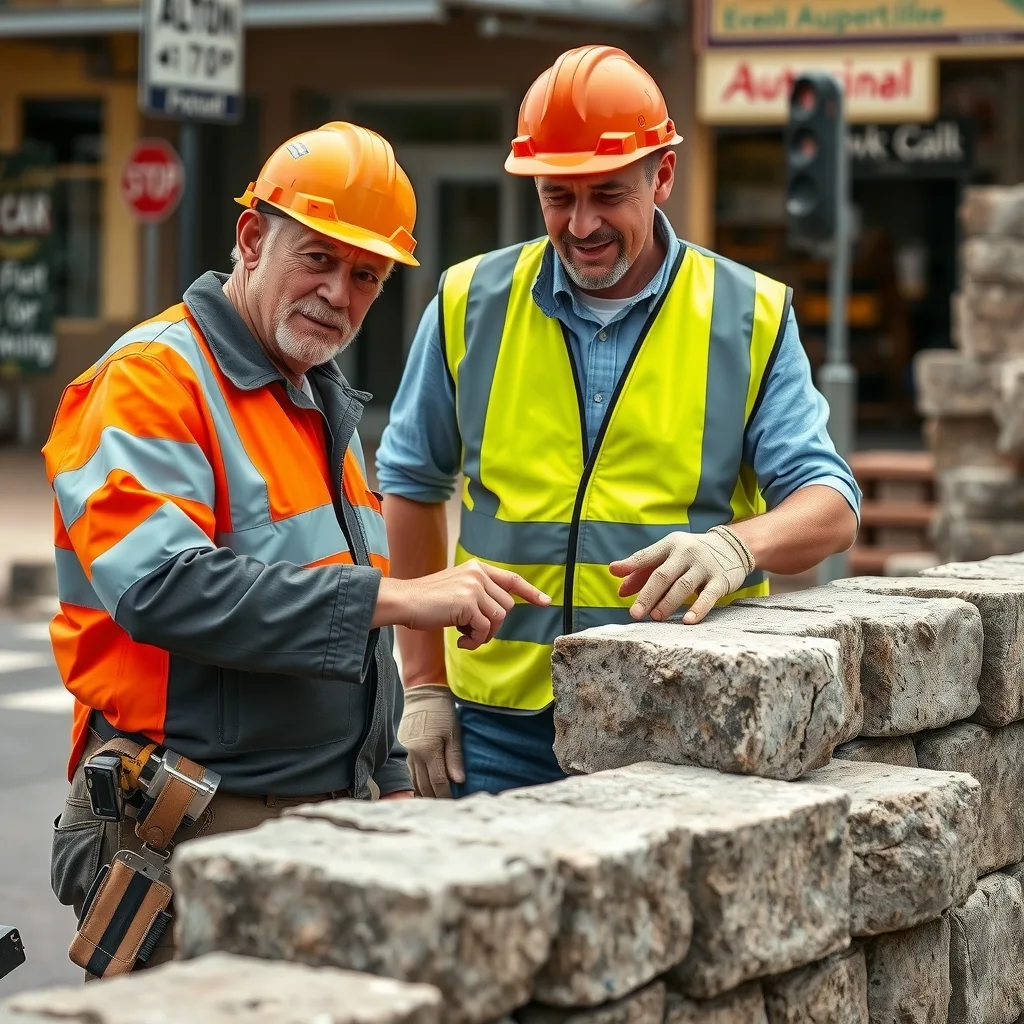
The association’s pitch is to build training around live jobs and pair young workers with the old hands. “As a group, we’re now pushing for a project-based intergenerational model,” Ms Cool said. “We need to have formal training.”
Right now the transfer happens informally, on site, at the pace of the work. Heritage stonemason Evan Zlnay, who is in his 20s, started at TAFE before taking up a specialised restoration apprenticeship with Colgan Industries, a firm the ABC reports employs only a few people under 30 and is trying to train younger workers.
“It’s just been having the old boys show me the little tips and tricks of heritage work,” Mr Zlnay said. “You’ve got to do what they did in the old days.”
“To learn, it takes a bit of time.”
The trade nobody tells apprentices about
Mr Zlnay reckons the bigger problem is that school leavers have never heard of the job.
“Not many people would know that it’s an option,” he said. “Everyone these days wants to be a plumber or a sparky.”
The work has taken him across WA, including Rottnest Island.
“You get to work on the coolest places,” he said. “You get satisfaction out of your job because you fix an old building and make it look new, but also not new at the same time.”
For anyone weighing up where to put an apprentice, the demand signal here is unusually clear: a bloke with 40 years up wants to retire, his phone won’t stop, and the maintenance cycle on 100,000-plus heritage buildings doesn’t end. Watch whether the Heritage Skills Association’s project-based training model gets picked up beyond South Australia’s Cert III, because until it does, the skills move on a job site or they don’t move at all.
Frequently asked questions
Is there a nationally recognised heritage stonemasonry qualification in Australia?
No. Heritage Skills Association chief executive Yolanda Cool says the only formal certification is a Cert III in heritage skills trades, offered in South Australia; no other state has an equivalent qualification.
How do heritage stonemasons currently learn the trade?
Mostly on the job. Apprentices such as Evan Zlnay learn from experienced tradespeople on site, since there’s little formal training available outside South Australia’s Cert III.
Why do some owners demolish heritage buildings instead of repairing them?
Yolanda Cool of the Heritage Skills Association says it’s often cheaper to demolish a heritage building and replace it with modern materials than to repair it, because tradespeople with the right restoration skills are scarce.
How many heritage-listed buildings does WA have?
According to Yolanda Cool, WA has almost 20,000 heritage-listed buildings, including those on the National Trust Register at a state level.
Sourced from ABC News. Original article.