
Bluebeam has opened Bluebeam Max, its highest subscription tier, to eligible students and educators worldwide at no cost. The move adds the company’s AI and automation tools to an Academic Program that already supplies software to universities, colleges, technical schools, training institutions and registered apprenticeship programs.
The expansion was reported by Inside Construction, which says the Max tier brings tools already used by architecture, engineering and construction professionals into classroom coursework rather than keeping them behind a paid subscription.
Sarah Parkinson, Academic Program lead at Bluebeam, framed it as a skills play.
“The next generation of AEC professionals will enter a workplace where AI and automation are already a part of how projects get reviewed and delivered,” Parkinson said.
“By expanding access to Bluebeam’s most advanced technology, exclusively available with a Max subscription, we’re helping students build career-ready digital skills and giving educators access to the latest industry technology.”
What the tier does to a set of drawings
According to the company, Max includes Revu capabilities built to automate repetitive tasks, flag design changes, support collaboration and pull insights out of project documents. The named features are AI-assisted review, automated markup generation, document comparison and what Bluebeam calls advanced document workflows, running through tools it lists as Smart Review, Smart Overlay, Magic Markups, Stitching and Revu connected to AI via Model Context Protocol.
Strip the branding and you’re looking at the paperwork half of a build. Drawings get reissued, revision C becomes revision D, and somebody has to work out what moved before the frames go up or the slab gets poured. That comparison and overlay job, plus marking up plans for an RFI or a variation, is the work these tools are pitched at.
It’s the part of the trade that doesn’t happen on the tools but decides whether the work on the tools has to be done twice.
A decade of it in a Swedish classroom
Linköping University in Sweden has taught construction logistics with Bluebeam since 2017, Inside Construction reported in September 2026, with students working off real project drawings and documentation rather than training files.
“We’ve used Bluebeam in our construction logistics teaching since 2017, and one of its greatest strengths is how quickly students can start applying it to real-world problems,” said Martin Rudberg, professor at Linköping University.
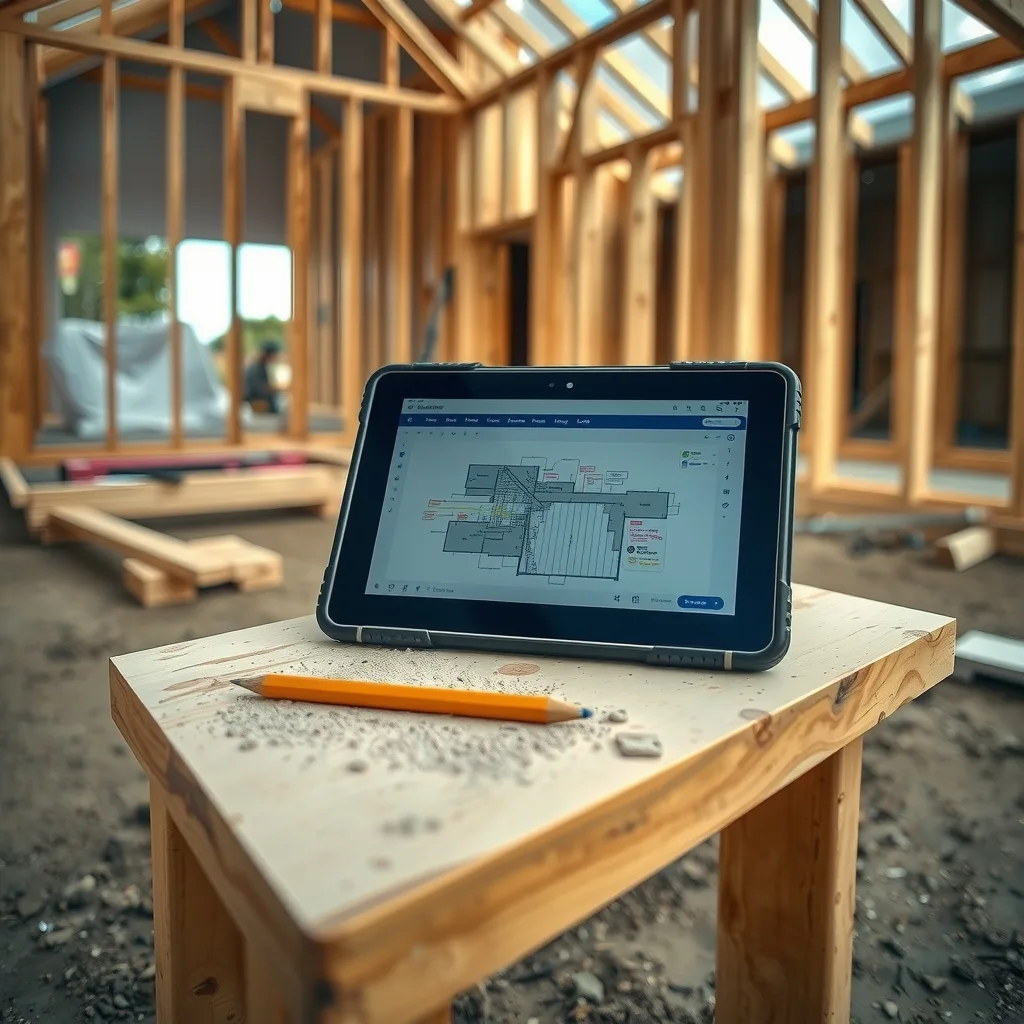
“Bluebeam allows students to focus on solving real construction logistics problems instead of learning software for the sake of learning software. That hands-on experience helps them develop skills they’ll use throughout their careers.”
That’s the same argument any decent trainer makes about a nail gun or a laser level. You learn the job, and the tool comes along for the ride.
Credentials before the first day on site
The other case study in the source is Green Mountain High School in Colorado, where the software sits inside a construction and design course aligned to the state’s career and technical education pathways.
Alexander Adkisson, construction teacher at Green Mountain High School, said the credential side matters as much as the software.
“They apply what they learn in hands-on projects and competitions, so by graduation they’ve already done the work. That’s a real advantage whether they head to a four-year program, an apprenticeship or straight into a job.”
What isn’t spelled out for Australia
The announcement is worldwide, but the two institutions named are in Sweden and the United States, and the phrase “registered apprenticeship programs” is American terminology. The source doesn’t name a single Australian TAFE, RTO or group training organisation, and it doesn’t set out how an Australian training provider or apprentice qualifies. Anyone here who wants in will need to read the program’s own eligibility terms at bluebeam.com rather than assume an Australian course is covered.
For a small builder or a subbie carrying an apprentice, the thing to watch is whether local training providers pick this up in their course delivery. A second-year who can already mark up a drawing set, run a comparison between revisions and send it back without a phone call is doing the office half of the job you’re currently doing at 7pm.
No price is attached to what happens after graduation, and the source doesn’t say what a former student pays once they’re out of the program. That’s the question worth asking before anyone builds a workflow around it.
Frequently asked questions
Is Bluebeam Max available to Australian apprentices?
The announcement is global, but the source names no Australian TAFE, RTO or apprenticeship program and doesn’t set out local eligibility rules, so anyone in Australia needs to check bluebeam.com directly.
What does Bluebeam Max add for students?
It adds Bluebeam’s AI and automation tools, including AI-assisted review, automated markup generation, document comparison and other document workflow tools, to the existing free Academic Program software.
Does Bluebeam say what the software costs after graduation?
No, the source doesn’t say what a former student pays for Bluebeam Max once they leave the Academic Program.
Sourced from Inside Construction. Original article.