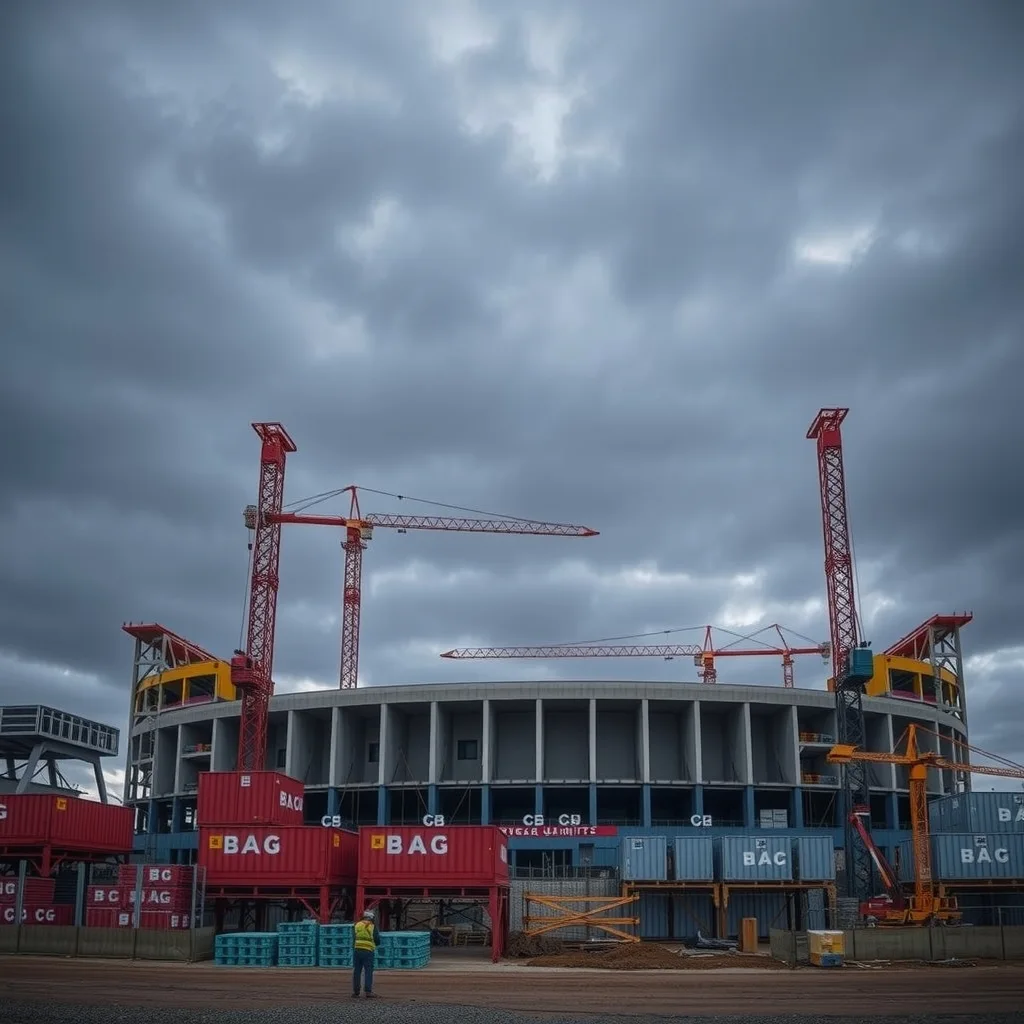

Construction firm BESIX Watpac has won the tender to build Hobart’s $1.13 billion Macquarie Point Stadium, the ABC understands, with a fixed-price contract expected to be signed before Christmas and the ground not due for completion until December 2030.
ABC News reports the Australian-based firm was one of two shortlisted bidders and has edged out a rival consortium headed by Italian firm WeBuild to progress to the second and final stage of the tender. An official announcement was expected to follow.
BESIX Watpac had been considered the strong frontrunner. WeBuild had come under scrutiny following revelations it was facing charges in New South Wales relating to alleged workplace safety breaches, the ABC reported.
Site works at Macquarie Point began in July. From here it’s roughly four years of construction before the gates open.
The budget number nobody has updated
The project carries a $1.13 billion budget, but that figure hasn’t been publicly updated since late last year, before an escalation of conflict in the Middle East that has helped push up fuel and diesel prices. Anyone who’s priced a job with a plant and haulage component in the last twelve months knows what that does to a number.
A final cost is still to be determined, and the haggling continues through detailed, exclusive contract negotiations over the next two months.
In May, a Greens motion calling for an updated cost estimate to be revealed by August passed Tasmania’s lower house. The Macquarie Point Development Corporation and the Tasmanian government haven’t released updated costings, citing risks to the integrity of a live procurement process.
There’s also a ceiling on the state’s contribution. The government is bound by a funding cap of $875 million, struck as part of an agreement with upper house MP Bec Thomas, who voted in favour of the stadium progressing in December last year.
Under that deal, any further money needed would be clawed back through “value management”, a reduction in scope, or sought from the federal government, the AFL or Cricket Australia. In builder’s language: if the price lands high, something gets trimmed, and trimming on a stadium usually means finishes, fitout and the back-of-house gear rather than the structure.
Christchurch is the form guide
BESIX Watpac finished Christchurch’s 30,000-seat roofed One New Zealand Stadium two months early in June, at a cost of just over $650 million, according to the ABC. That’s the closest comparable job on the firm’s book, and it’s the one Tasmanian subcontractors should be studying.
The same firm, in a joint venture with John Holland, has also won the contract to build Brisbane’s 63,000-seat Olympic stadium, a job slated at about $3.6 billion. Two roofed stadium programs running at once across the east coast is a lot of the same specialist labour pool being asked for at the same time.
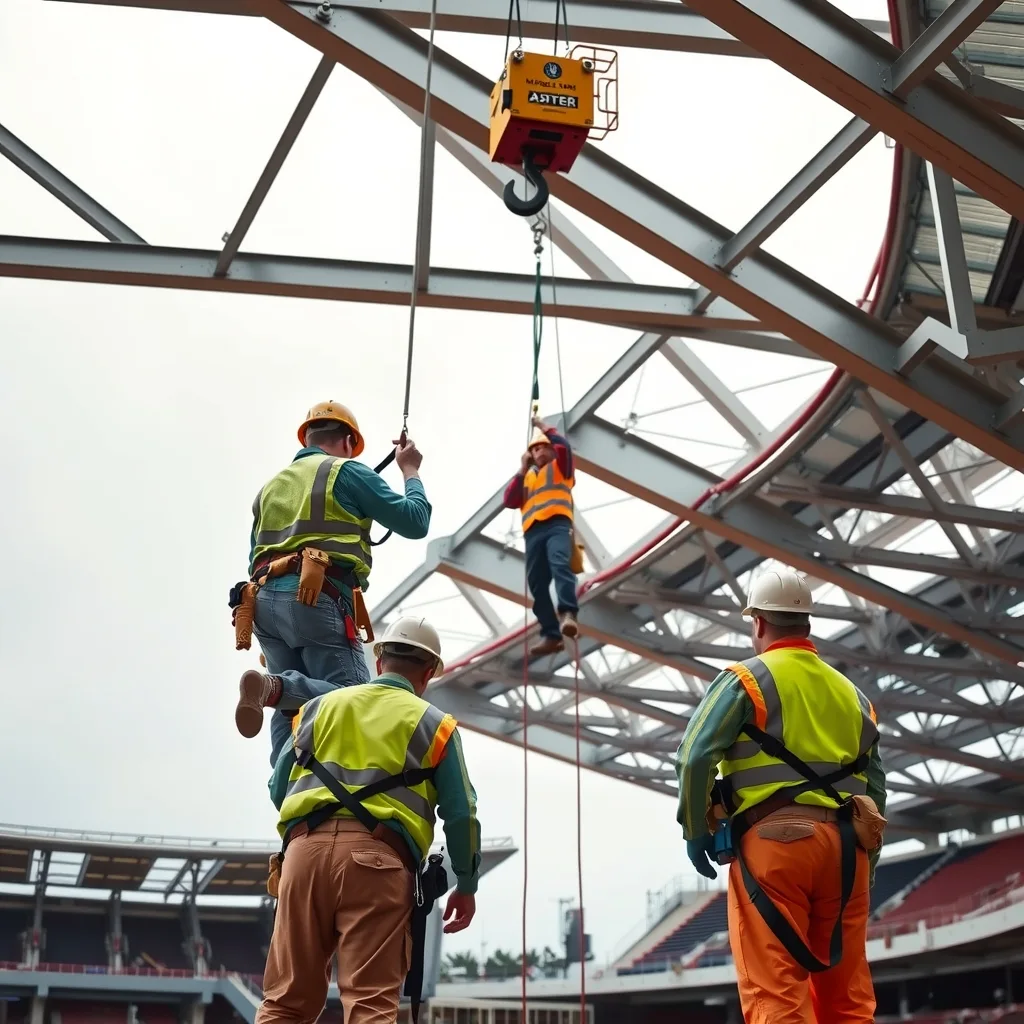
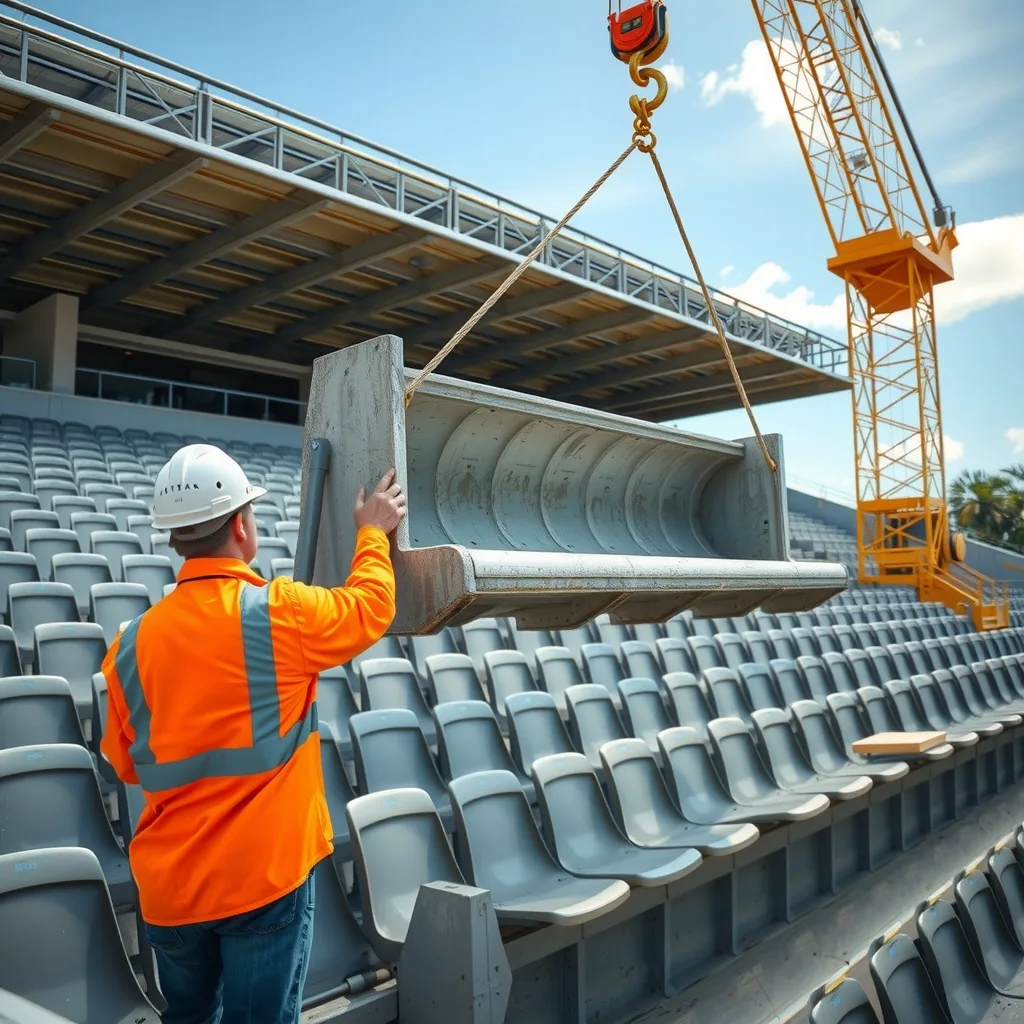
A roofed stadium isn’t one job, it’s three strung together. Bulk earthworks and foundations come first, then the bowl itself, which is heavy on in-situ concrete for the concourses and craned-in precast for the seating plats. The roof structure follows, and that’s a structural steel and rigging exercise before anything weathertight exists below it.
Only then does the long tail start: mechanical, electrical and hydraulic services through the concourses, kitchens and cool rooms for the food outlets, joinery and glazing through the hospitality levels, seat installation across the bowl. The Christchurch photos published by the ABC show what that end of the work looks like, and it isn’t a stadium job so much as a very large commercial fitout wrapped around a sports field.
When the packages actually hit the market
For anyone running a subbie business in southern Tasmania, the date that matters isn’t today’s announcement. It’s the signing of the fixed-price head contract before Christmas, because until a head contractor knows its own number, the trade packages underneath it aren’t locked either.
That makes the first half of 2027 the window to watch for subcontract tenders on the early structural scopes, with services and fitout packages coming later in the program. An approval today is work in your diary next year, not next month, which is the usual trap for small outfits deciding whether to put on an extra apprentice off the back of a headline.
The other thing to watch is the scope. If the price comes back above the state’s $875 million cap and nobody else puts their hand up, “value management” is the mechanism that decides which packages shrink.
There’s also a deadline that isn’t negotiable in the usual way. The stadium’s construction is a requirement of the Tasmania Devils’ entry into the AFL and AFLW from 2028, while the venue itself isn’t expected to be complete until December 2030.
So the next marker is the contract signature, and whether an updated cost estimate lands with it. If it does, that number tells Tasmanian trades more about the next four years of work than anything said at a sod-turning.
Frequently asked questions
When will subcontractors see trade packages for the Macquarie Point stadium?
The first half of 2027 is the window to watch for subcontract tenders on early structural scopes, once the fixed-price head contract is signed, with services and fitout packages following later in the program.
What’s the budget for the Macquarie Point stadium?
The project carries a $1.13 billion budget, though that figure hasn’t been publicly updated since late last year. The Tasmanian government’s own contribution is capped at $875 million under a deal struck with upper house MP Bec Thomas.
When does the Macquarie Point stadium need to be finished?
The venue isn’t expected to be complete until December 2030, though the stadium’s construction is a requirement of the Tasmania Devils’ entry into the AFL and AFLW from 2028.
Sourced from ABC News. Original article.